Investment applications submitted to Thailand’s Board of Investment rose 37% from a year earlier to 1.473 trillion baht, or about $43.6 billion, in the first half of 2026. The July 23 release counted 1,299 proposed projects and attributed most of the value to digital infrastructure, including cloud and artificial-intelligence data centers.
The number is a measure of intent, not money already spent. BOI approved promotion for 1,300 projects worth 1.31 trillion baht during the same period; the application and approval populations do not match perfectly because decisions can relate to earlier filings. Separating those figures is essential in a market where large server campuses take years to secure land, electricity, equipment and customers.
Thailand’s first-half pipeline is large and unusually concentrated: digital-sector applications reached 1.115 trillion baht across 90 projects, about three-quarters of the total value. The next test is conversion. BOI says approved projects could create more than 82,000 jobs and add 1.24 trillion baht of annual export capacity, but those benefits depend on facilities reaching construction and operation.
Singapore leads a concentrated inflow
Foreign direct-investment applications totaled 1.368 trillion baht across 877 projects. Singapore was the largest named source, with 1.121 trillion baht across 158 applications, much of it associated with digital infrastructure. The United Kingdom followed at 47.2 billion baht, China at 45.8 billion, Taiwan at 38 billion and Japan at 32.8 billion.
Source-country data can reflect the jurisdiction of the investing entity rather than the ultimate owner of capital. Singapore is a regional headquarters and financing center for multinational groups, so its share should not be read as evidence that only Singaporean companies are driving the boom. It does show how capital for Southeast Asian infrastructure is commonly routed.
Electronics and electrical-appliance applications totaled 120.23 billion baht across 179 projects. BOI highlighted optical transceivers, printed-circuit boards, hard drives, networking and cooling systems—the physical supply chain surrounding a data center. Those projects may generate broader manufacturing linkages than a server campus that imports most of its equipment.
Power, water and skills are the constraint set
Thailand is competing with Malaysia, Indonesia and Singapore for hyperscale investment. Land and tax incentives help, but operators choose locations according to grid reliability, access to renewable power, fiber connectivity, permitting time and the availability of engineers. A large cluster can require hundreds of megawatts. Securing that load without raising costs or emissions for other users is a public-policy challenge as much as an investment-promotion task.
BOI secretary general Narit Therdsteerasukdi acknowledged the conversion issue by emphasizing the Thailand FastPass mechanism, intended to move approved projects through administrative bottlenecks. He said success should be judged through quality jobs, higher skills, local supply-chain opportunities and geographically distributed growth. That is a more demanding standard than announcing application value.
Geography will shape the benefit. BOI said the industrialized Central region attracted the largest share of proposed capital, about 901.5 billion baht. Eastern provinces already host ports, industrial estates and power infrastructure suited to large projects. Concentration can create an efficient cluster, but it can also intensify pressure on grids, water systems and skilled-labor markets. Narit’s call for growth beyond a few locations should therefore be tested against the final addresses of promoted facilities.
Data centers also create fewer permanent jobs per dollar invested than many factories. Construction employment can be substantial, while the operating workforce is smaller and more specialized. The economic case improves when local firms supply cooling, electrical systems, maintenance, cybersecurity and network services. Training numbers and domestic procurement should accompany megawatt announcements so that capital intensity is not mistaken for broad employment intensity.
The board estimates that first-half approved projects will use 386 billion baht of domestic raw materials annually, equivalent to 42% of their total input value. It also expects more than 82,000 Thai jobs. Those projections give the public measurable commitments. Follow-up reporting should compare them with payrolls, procurement and output after the projects begin operating.
Investment quality beyond headline capital
Under BOI’s Smart and Sustainable Industry initiative, companies submitted 132 applications worth 17.2 billion baht to upgrade machinery, adopt digital technology and install automation or robotics. That amount is small beside the data-center wave, but it may reach a wider group of existing manufacturers. Productivity gains inside established factories can spread through suppliers faster than a single capital-intensive campus.
There is substantial counterevidence to a simple boom narrative. Proposed data centers can be delayed when power connections, environmental reviews or customer contracts fail to align. AI hardware prices can change before construction finishes. Operators may also reserve large sites and incentives as options, then build only part of the announced capacity. Application value therefore overstates near-term economic activity by design.
Thailand has shown that it can attract multinational projects, including the Korean biotech and wellness commitments covered in a recent InfluenceAsia investment report. It also competes inside a region where governments are linking AI ambitions to trade, as discussed during South Korea’s outreach to South America. The differentiator will be delivery speed and infrastructure quality, not the size of an incentive announcement.
Three forward metrics will make the first-half figure useful: the share of approved value that reaches construction, the megawatts of data-center capacity energized, and the number and wage level of permanent local jobs. BOI can also disclose how much promoted equipment and service spending stays with Thai suppliers. Those measures will reveal whether 1.47 trillion baht became an operating digital economy or remained a record application pipeline.
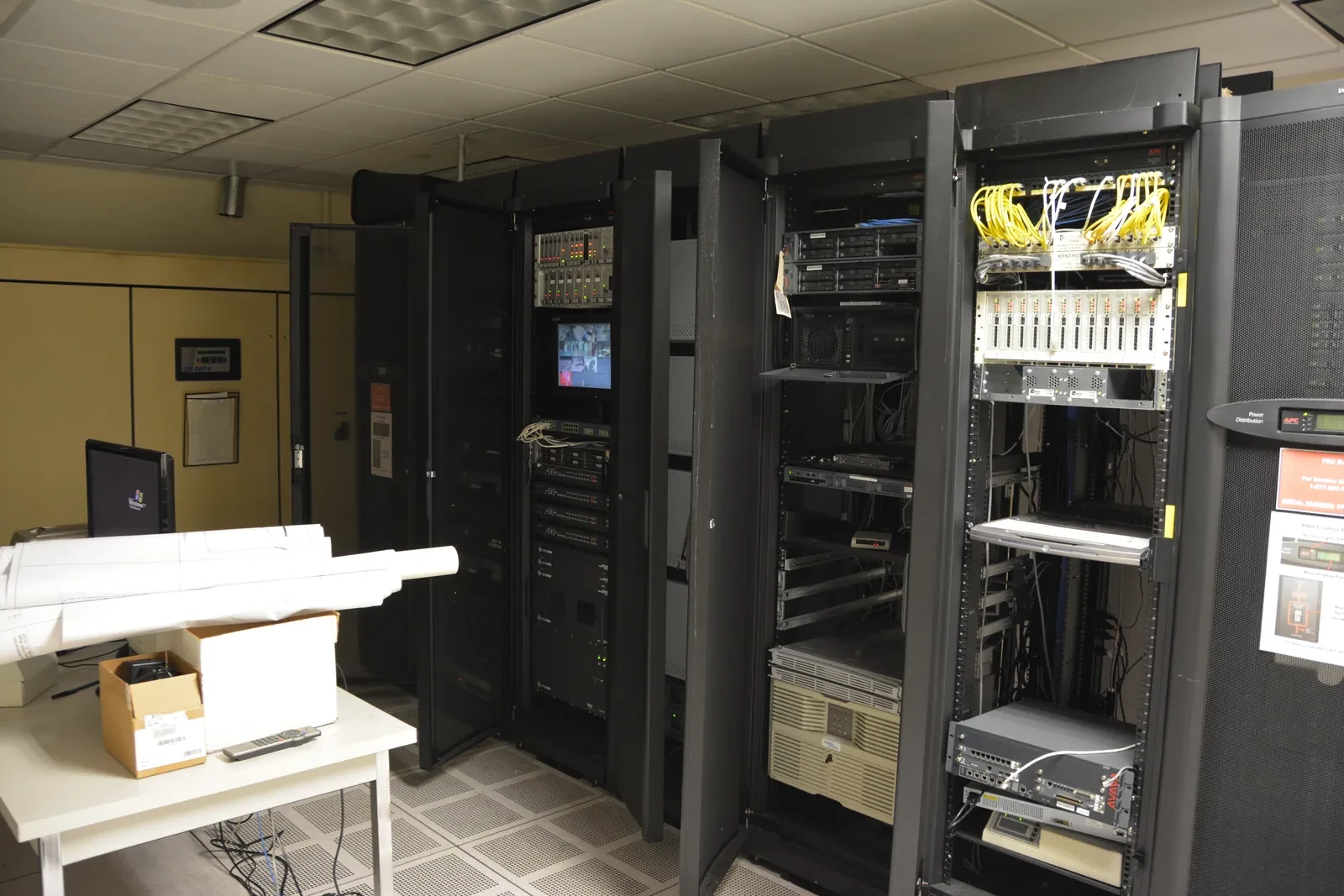
The server-room photograph is by Carl Lender and is used under CC BY 2.0 via Wikimedia Commons; the image has been resized and converted to WebP.