Kia entered 2026 with the momentum of a company whose brand and product economics had changed materially. It sold a record 3.14 million vehicles in 2025 and generated record annual revenue of KRW114.1 trillion. In the first quarter of 2026, revenue reached another record, KRW29.5 trillion, while wholesale volume rose to 779,741 vehicles and global retail market share exceeded 4 per cent for the first time.
The quarter also exposed the vulnerability beneath that progress. Operating profit fell 26.7 per cent to KRW2.21 trillion, reducing the margin to 7.5 per cent. Kia attributed the decline principally to the full effect of United States tariffs, alongside higher incentives and warranty provisions. Record scale did not prevent a sharp reduction in earnings.
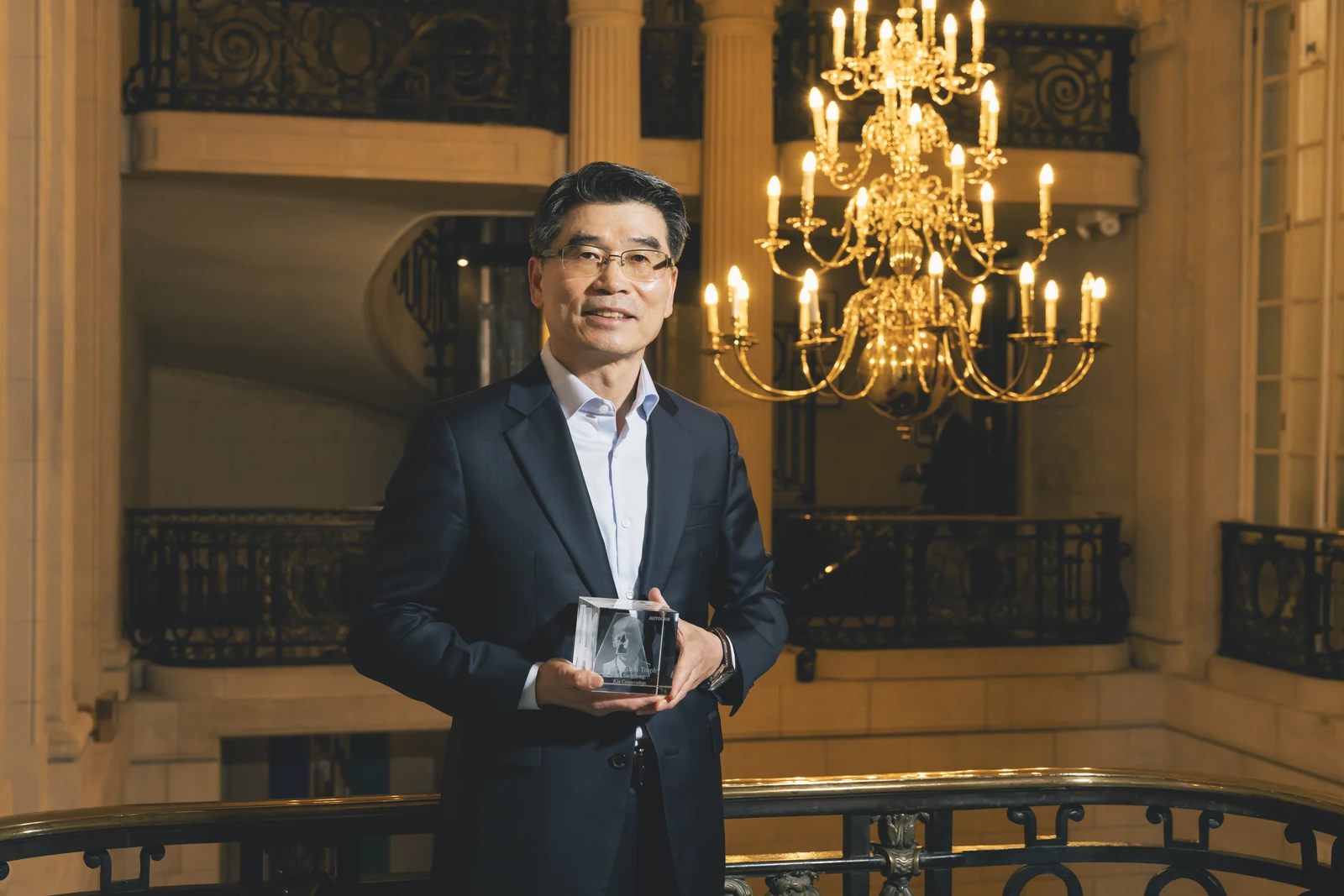
Ho Sung Song remains Kia’s president and chief executive, with the company’s 2026 governance disclosures confirming his position. His central challenge is to preserve the higher-value brand and product mix built over recent years while adapting production, pricing and powertrains to a more fragmented trade environment. The easy answer would be to protect volume through incentives or pass every cost to customers. Either could damage the franchise.
Kia’s advantage is flexibility. In the first quarter, global retail sales of electrified vehicles rose 33.1 per cent to 232,000, or 29.7 per cent of total sales. Battery-electric sales increased 54.1 per cent to 86,000, while hybrids rose 32.1 per cent to 138,000. The company can adjust the mix by region rather than depend on a single adoption curve.
That flexibility now has to become an industrial capability, not just a broad catalogue. Song must decide which vehicles to localise, how quickly to expand hybrid capacity, where electric scale is commercially defensible and how much tariff cost can be offset through mix and productivity. At the same time, he is investing in purpose-built vehicles and a wider mobility strategy that will only create value if the core car business retains financial discipline.
Tariffs turn footprint into strategy
Trade barriers change more than the cost of an imported vehicle. They influence where models are built, which suppliers are viable and how capital is allocated across a decade. Kia’s manufacturing facilities in Korea and overseas give it options, but shifting production is expensive and slow. A plant optimised for one set of models cannot instantly reproduce another region’s mix.
Song needs a footprint plan based on durable scenarios rather than each policy announcement. Localising high-volume vehicles and components can reduce tariff exposure, improve political legitimacy and shorten supply chains. Excessive localisation can duplicate investment and weaken scale economies if trade rules later change. The company should identify which capabilities are strategic in each region and preserve the ability to reallocate volume among plants.
The United States is the immediate profit pressure point and one of Kia’s most important markets. Strong demand for SUVs, multipurpose vehicles and hybrids gives the company pricing and mix opportunities. The new Telluride and expanded hybrid offerings can support value, but production and sourcing decisions must reflect the full landed cost. Incentives should be used to manage model transitions, not conceal structural mispricing.
Europe presents a different equation. Regulation and customer demand support a fuller electric line-up, from compact models to larger vehicles. Kia can use products such as the EV2, EV3, EV4 and EV5 to broaden participation. Profitability will depend on battery cost, local competition and the ability to sell software and services without making ownership complicated.
India and other emerging markets reward local design and affordability. Kia targets growth through regionally adapted vehicles rather than exporting a universal premium specification. That approach should remain central. The company’s global brand is strengthened when products share quality and design values, not necessarily identical technology.
A mixed powertrain strategy needs common economics
Kia’s 2026 plan targets 1.12 million electrified vehicles, including 691,000 hybrids and 400,000 battery-electric models. This mix recognises that the transition is occurring at different speeds. Hybrids meet strong demand in the United States and other markets where charging remains uneven. Battery-electric vehicles are advancing faster in Europe, Korea and selected urban segments.
Flexibility can become complexity if each powertrain requires separate platforms, factories and software. Song must push common components and manufacturing systems where possible. A modular approach can allow plants to respond to demand without carrying underused dedicated capacity. Procurement should aggregate semiconductors, electronics and other shared parts while recognising that batteries and engines have different supply risks.
Powertrain decisions should be judged on full economics. A hybrid may offer a stronger near-term margin but still require emissions compliance and dual propulsion systems. An electric vehicle may have lower mechanical complexity but expensive batteries and volatile residual values. Regulatory credits, incentives, warranty costs and financing all affect the comparison.
Kia’s quarterly data show that customers will buy both when the product is attractive. The company’s task is not to declare one technology victorious, but to reduce the cost of serving multiple paths. Software architecture, design processes and purchasing can be shared even when energy systems differ.
Brand progress must not be discounted away
Kia’s transformation has allowed it to sell design-led vehicles at higher average prices and reach customers who might once have dismissed the brand as a value alternative. That progress is visible in record revenue and market share. It is also vulnerable when external costs rise.
A heavy response through discounts would support factory utilisation while training customers to wait for incentives. Song should protect pricing by managing supply, prioritising high-demand configurations and explaining product value. Warranty provisions in the first quarter are a reminder that quality determines whether higher prices are sustainable. Design recognition attracts buyers; dependable ownership retains them.
Warranty data should feed rapidly into engineering and supplier management. Electrified vehicles introduce new failure modes in batteries, power electronics and software, while connected features create continuous obligations after sale. Over-the-air updates can resolve some problems efficiently, but they require secure systems and clear customer communication.
The dealership network also has to support the newer positioning. Electric and hybrid customers need guidance on charging, energy use and residual value. Commercial buyers evaluating purpose-built vehicles need uptime and fleet services. A sophisticated product sold through an inconsistent ownership experience weakens the premium Kia has earned.
Purpose-built vehicles need a customer problem
Kia’s Platform Beyond Vehicle strategy extends the company into modular electric commercial vehicles, beginning with products such as the PV5. The concept addresses logistics, passenger transport and specialised fleet uses through adaptable bodies and connected services. It can create recurring relationships less dependent on consumer replacement cycles.
The danger is treating a new category as valuable because it is technologically interesting. Commercial customers buy total cost, uptime and operational fit. Song should concentrate on a few use cases where Kia can combine vehicle design, manufacturing scale, charging partnerships and fleet software. Bespoke variants must be managed carefully so that customisation does not destroy production economics.
Fleet customers also expose the company to service-level expectations closer to industrial equipment than retail cars. Parts availability, remote diagnostics and rapid repair determine value. Kia’s future hub in Korea and dedicated production investment should therefore be evaluated not only by units built, but by utilisation and customer retention.
Data can deepen the model if governance is strong. Route patterns, charging and maintenance information can improve fleet economics and product design. Customers must control how operational data is used, and cybersecurity needs to be built into connected vehicles from the start. A compromised fleet would create safety and business-continuity risks beyond a conventional product defect.
The financial targets require quality
Kia entered 2026 targeting 3.35 million wholesale sales, revenue of KRW122.3 trillion and operating profit of KRW10.2 trillion at an 8.3 per cent margin. The first-quarter revenue performance supports the scale ambition, while the profit decline shows how demanding the earnings target has become.
Song should not pursue the target through actions that weaken later years. Delaying necessary warranty expenditure, overproducing vehicles or relying on financing incentives can support a period while increasing residual and credit risk. The more persuasive response to tariffs is structural: local content, productivity, mix and selective pricing.
Capital allocation must support that response. New factories, battery arrangements, software and purpose-built-vehicle capacity all compete for funds. Shareholder returns remain important after Kia delivered a 35 per cent total shareholder return for 2025, but investment decisions should be assessed against realistic regional demand rather than a single global electrification curve.
Kia’s 2030 ambitions include higher volume, a larger electrified mix and operating profit well above the current level. Long-range targets can align the organisation, but Song should retain the flexibility to change the route. The lesson of the industry’s recent EV revisions is that fixed volume promises can drive investment ahead of customers.
Leadership across a group
Kia operates within Hyundai Motor Group, which provides scale in platforms, purchasing, batteries, software and manufacturing. The relationship is an advantage when shared investment reduces cost. It can become a constraint if brand decisions are subordinated to group uniformity.
Song’s role is to preserve Kia’s distinct customer proposition while using common capabilities beneath it. Design, model positioning and the ownership experience should remain recognisably Kia. Components and technology should be shared where customers do not value difference. Clear decision rights prevent duplicated development without erasing healthy internal competition.
The group structure also creates opportunities to coordinate tariff and production responses. Volume can be allocated across facilities and suppliers with a wider view than one brand could achieve. Governance needs to ensure that costs and benefits are distributed transparently so that Kia shareholders can assess the economics.
The next proof of transformation
Ho Sung Song has overseen a period in which Kia moved from successful challenger to a company with record revenue, broader pricing power and a credible electrified portfolio. The first quarter of 2026 demonstrates that the transformation is real: industry demand weakened, yet Kia increased sales and market share. It also demonstrates that scale alone cannot neutralise trade policy.
The next proof will be margin resilience. Kia needs to grow electrified sales, localise intelligently and protect the brand without using incentives as a permanent answer. It must convert a broad powertrain line-up into flexible production and turn purpose-built vehicles from an industrial concept into a customer business.
Tariffs are an external shock, but the quality of the response belongs to management. A strong response will leave Kia with a better regional footprint, more adaptable factories and a clearer view of where each technology earns its place. A weak one will produce duplicated investment, discounted volume and volatile returns.
Song’s 2026 challenge is therefore not simply to achieve another sales record. It is to show that Kia’s new scale comes with institutional flexibility: the ability to absorb policy change, shift technology and keep earning the higher margins of a stronger brand. If he succeeds, the tariff period may become a test that deepens Kia’s transformation rather than interrupts it.