GoTo crossed an important threshold in the first quarter of 2026. Indonesia’s largest digital ecosystem reported its first quarterly net profit, Rp171 billion, reversing a loss of Rp367 billion a year earlier. The number was modest beside the scale of the platform, but its symbolic weight was considerable. After years in which Southeast Asian technology companies were valued primarily for reach, transactions and strategic possibility, GoTo could finally point to evidence that its operating model was capable of producing an accounting profit.
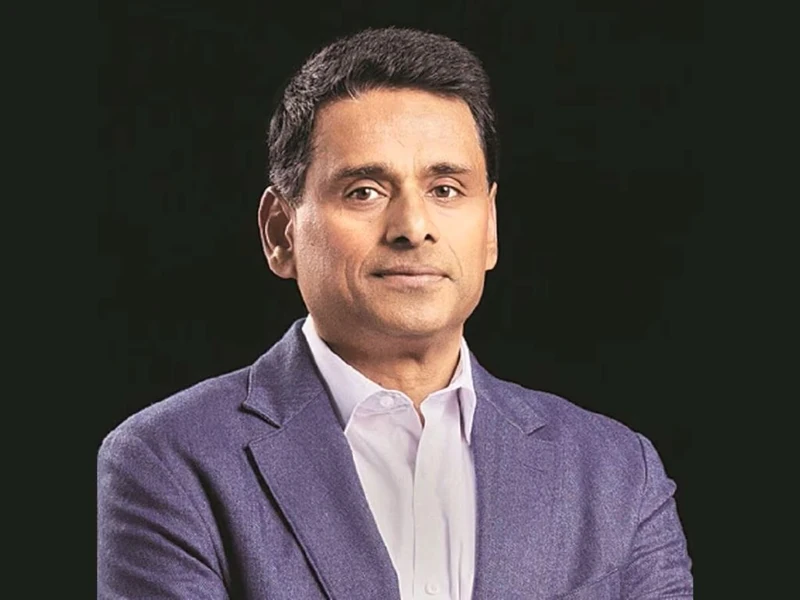
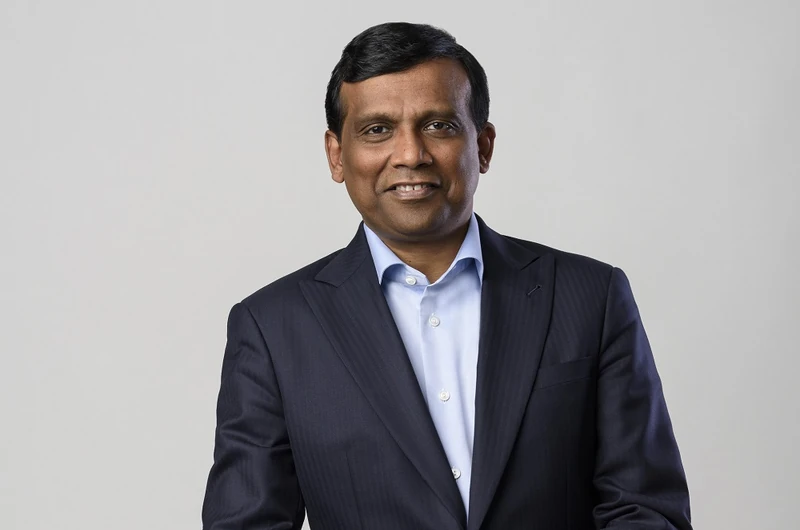
For Hans Patuwo, who was approved as president director and group chief executive in December 2025, that milestone is less a conclusion than a change in the terms of the job. A company that has demonstrated profitability no longer receives much credit merely for reducing losses. It must show that profit can expand without weakening the network on which it depends: consumers seeking affordability, driver-partners seeking dependable earnings, merchants seeking demand, borrowers requiring responsible access to credit and shareholders expecting a return on years of capital.
The first-quarter figures suggest that GoTo enters this phase with real momentum. Group core gross transaction value rose 65 per cent year on year to Rp138 trillion, while net revenue increased 26 per cent to Rp5.3 trillion. Adjusted earnings before interest, tax, depreciation and amortisation reached records in both financial technology and on-demand services. GoTo also reaffirmed full-year adjusted EBITDA guidance of Rp3.2 trillion to Rp3.4 trillion, implying a rise of 59 to 69 per cent from 2025.
Those numbers define Patuwo’s central commercial question. Can GoTo turn operating leverage into a permanent capability while remaining useful to the Indonesian economy, or will profitability depend on a temporary combination of lower incentives, tighter costs and benign credit performance? The answer will matter well beyond one listed company. GoTo sits at the junction of urban mobility, food delivery, payments and consumer finance in the world’s fourth most populous country. Decisions made in its Jakarta headquarters travel quickly into household budgets and informal-sector incomes.
From repair to compounding
The previous phase of GoTo’s development was a repair exercise. Management reduced expenditure, simplified the portfolio and shifted attention from aggregate transaction growth towards transactions that produced an acceptable economic return. The 2025 results showed the impact. Adjusted group EBITDA reached Rp2 trillion, exceeding guidance, while adjusted free cash flow for the year was Rp966 billion. Core GTV rose 49 per cent to Rp400 trillion and net revenue reached Rp18.3 trillion.
Patuwo now has to preserve that discipline without allowing it to become institutional caution. Cost control can restore credibility, but a digital platform compounds only when it keeps improving the usefulness and density of its network. In mobility, that means matching supply and demand accurately enough to shorten waiting times while maintaining viable driver earnings. In food delivery, it means helping merchants generate incremental orders rather than merely redistributing demand through discounts. In financial services, it means converting payment activity into carefully underwritten credit and savings relationships.
The first-quarter mix is encouraging. Adjusted EBITDA in fintech increased 674 per cent to Rp364 billion, monthly transacting users rose 33 per cent and the loan book expanded 59 per cent to Rp9.9 trillion. On-demand services delivered adjusted EBITDA of Rp439 billion, up 40 per cent, helped by premium products aimed at more affluent users. The two divisions are beginning to reinforce one another: transport and food transactions generate data and payment frequency, while financial products deepen customer value and may improve retention.
Yet this is precisely where management quality will become visible. Rapid lending growth can flatter near-term revenue before credit costs fully emerge. Premium services can lift margins while leaving the mass market more exposed to price increases. A platform may reduce incentives faster than participants can adjust, producing a profitable quarter at the expense of network health. Patuwo needs a management system that distinguishes genuine productivity from value transferred away from one stakeholder group.
Artificial intelligence and a lower cost to serve are part of the answer, but not a substitute for it. Better dispatch, fraud detection, customer support and underwriting can remove friction without cutting participant economics. If GoTo uses technology to reduce empty driver kilometres, identify high-quality borrowers and resolve disputes more quickly, efficiency becomes distributable. If it uses automation only to lower headcount or raise take rates, it risks confusing extraction with innovation.
The fintech opportunity requires restraint
GoTo’s financial technology business may be the largest source of incremental value and the largest source of latent risk. Indonesia still has substantial unmet demand for accessible financial services. GoPay’s position within everyday transactions gives the group a distribution advantage that conventional banks would find expensive to reproduce. The ability to observe payment behaviour can also improve underwriting for consumers and merchants with limited formal credit histories.
But a platform’s informational advantage creates an obligation to use it responsibly. A 59 per cent expansion in the loan book deserves attention not because growth is inherently excessive, but because the quality of that growth will only become clear across a full credit cycle. Delinquencies, repeat borrowing, customer concentration and the behaviour of third-party funding partners will matter more than originations alone. Patuwo should be judged on whether GoTo builds a finance franchise that can slow down before regulators or losses force it to.
That discipline is compatible with ambition. Payments users who already transact frequently can be offered small, transparent products with repayment structures suited to irregular incomes. Merchants can receive working capital tied to observable turnover rather than optimistic projections. Risk models can be tested for bias and resilience, with human review retained where automated decisions carry significant consequences. The business can grow quickly while still recognising that trust is an asset with a longer duration than a quarterly revenue target.
There is also a capital-allocation question. GoTo’s balance sheet and positive adjusted free cash flow create room to invest, but fintech growth should not become an excuse for an undisciplined return to the expansion habits of the previous technology cycle. Capital belongs where the group has proprietary data, distribution and operational expertise. Products that rely mainly on subsidy or regulatory arbitrage should face a higher hurdle.
A social contract under scrutiny
Platform economics in Indonesia are inseparable from public policy. Online motorcycle taxis and delivery work provide flexible income to a vast population, but commission rates, incentives and social protection remain politically sensitive. In July 2026, operators began applying an 8 per cent commission to two-wheel passenger transport under a new framework. Such changes may reduce one source of pressure for drivers, but they also make it more important for platforms to demonstrate that pricing, promotions and ancillary charges are transparent.
Patuwo cannot treat engagement with drivers as a communications exercise conducted after commercial decisions are complete. The company needs regular evidence on hourly earnings after fuel, vehicle maintenance, insurance and waiting time. It should understand how algorithm changes redistribute work across locations and driver cohorts. It should also recognise that a stable supply base is not merely a social objective; it is the infrastructure that determines service quality.
The same logic applies to merchants. Small restaurants and shops often lack the bargaining power or analytical capacity of national chains. GoTo can strengthen its ecosystem by making fees intelligible, helping merchants measure the profitability of promotions and providing tools that improve inventory and demand planning. A platform that raises the capability of its participants can earn more over time than one that maximises each transaction in isolation.
GoTo’s scale also places it under a wider governance lens. The separation of Tokopedia’s e-commerce operations through the partnership with TikTok altered the group’s economic shape, leaving service-fee income and strategic exposure rather than full control of the marketplace. Patuwo must ensure that related commercial arrangements are governed with clarity and that the interests of GoTo’s minority shareholders remain visible in decisions involving powerful partners.
Indonesia first, but not Indonesia only
GoTo’s strongest advantage is its density and local knowledge in Indonesia. That should discourage expansion for prestige. Southeast Asia has repeatedly shown that superficially similar markets contain different regulation, consumer behaviour, payment systems and competitive structures. Geographic reach is useful only when the company can establish a defensible network and a path to returns.
At the same time, an Indonesia-first strategy need not be narrow. The country is large enough to support multiple layers of growth: deeper penetration outside major cities, more financial products, better advertising tools, business services for merchants and selective premium offerings. The company can also export technology and operating expertise without rebuilding every consumer-facing network from scratch.
Patuwo’s task is therefore one of concentration. He must decide which few capabilities deserve disproportionate investment and which activities should remain partnerships. GoTo’s strongest candidates are likely to be payments, underwriting, real-time logistics and the data infrastructure that connects them. Each is strengthened by transaction density; together they create an ecosystem that is difficult to replicate.
Execution will require a different organisational rhythm from a turnaround. During retrenchment, management can align around obvious objectives: lower costs, dispose of distractions and preserve cash. During compounding, trade-offs become less visible. A new feature may increase engagement but worsen unit economics. A credit product may accelerate revenue while increasing tail risk. A lower commission may improve driver supply but require higher consumer prices. Patuwo needs decentralised teams capable of acting quickly, combined with group-level measures that prevent local optimisation.
The meaning of the first profit
GoTo’s first net profit is valuable because it expands choice. A loss-making platform must eventually satisfy its financiers. A profitable one can decide how much to reinvest, which participants to support and where to accept short-term pressure in pursuit of a stronger network. The milestone gives Patuwo strategic agency, but it does not determine how wisely he will use it.
The next several quarters should be read for quality as much as scale. Revenue growth should remain ahead of cost growth, but not through service deterioration. Fintech earnings should rise alongside prudent loss performance. On-demand margins should improve while driver availability, merchant retention and customer frequency remain healthy. Free cash flow should fund product and infrastructure investment without reviving portfolio sprawl.
Patuwo has inherited a company that is more coherent than the one that entered the public market. He has also inherited expectations that are more demanding. The market will no longer ask whether GoTo can survive a post-growth reckoning. It will ask whether the group can become a durable institution in Indonesia’s digital economy.
That distinction is the real significance of 2026. Profitability has moved from aspiration to evidence. The leadership challenge is to make it repeatable, responsibly distributed and strategically useful. If Patuwo succeeds, GoTo’s first profit will be remembered not as the end of a turnaround, but as the beginning of a more mature form of platform growth.