Life expectancy increased in every one of 34 Asian countries and territories between 1990 and 2023, according to an analysis published by Nature on July 22. The gains were not uniform: South Asia recorded the fastest average annual improvement, while high-income Asia-Pacific economies advanced more slowly from much higher starting points. Covid-19 interrupted the long rise and produced declines in several places after 2019.
The study, based on Global Burden of Disease 2023 estimates, is a map of both progress and unfinished work. It attributes improvements to different causes in different parts of the region. Falling deaths from diarrhoeal disease and tuberculosis mattered most in South and Southeast Asia, while reductions in cardiovascular mortality contributed heavily in Central, East and high-income Asia-Pacific.
Asia’s longevity story is not one convergence story. All 34 locations gained life expectancy over the full 1990–2023 period, but they did so by solving different health problems and from very different baselines. The pandemic caused a loss of nearly two years in the first Covid year across the study region, showing how quickly infectious threats can reverse gains built through chronic-disease control and basic public health.
Three decades, multiple transitions
Life expectancy is a compact measure: the average number of years a newborn would live if current age-specific death rates continued. It summarizes mortality without describing quality of life or inequality within a country. A rising national number can coexist with large gaps by income, sex, geography or ethnicity.
The Nature paper uses a consistent modeling framework to compare places where civil-registration and cause-of-death systems vary in completeness. That makes regional comparison possible, but it also means some values are estimates built from surveys, censuses, medical certification and statistical adjustment. The uncertainty is larger where primary records are sparse.
South Asia’s strong pace reflects large reductions in deaths that once occurred early in life. Clean water, sanitation, vaccination, maternal care and effective treatment of infections can add many years rapidly when child and young-adult mortality starts high. Those interventions remain unfinished; the same region still carries preventable burdens that richer systems have largely controlled.
In East Asia and wealthier economies, the task has shifted. Longer lives make cancer, stroke, ischemic heart disease and neurodegenerative illness more prominent. Progress depends less on one-time coverage expansion and more on continuous prevention, early diagnosis, adherence and long-term care. South Korea, for example, rose from about 71.7 years in 1990 to 83.4 in 2023, according to regional reporting on the study, close to the high-income Asia-Pacific average of 84.1.
The Covid interruption
Between 2019 and 2023, several countries and territories recorded life-expectancy declines. Covid deaths were the direct driver, but delayed treatment and disrupted prevention also affected mortality. The regional loss of nearly two years in the first pandemic year was not distributed evenly. Exposure, vaccination timing, health-system capacity and the accuracy of death reporting all influenced the measured effect.
The rebound matters as much as the fall. A country can recover the lost level once excess deaths subside without returning to its earlier trend line. Analysts should therefore compare 2023 with both 2019 and the life expectancy that would have been expected if the pre-pandemic trajectory had continued. “Back to the previous number” can still represent several years of foregone progress.
The pandemic also complicates cause attribution. Countries with stronger registration may record more Covid deaths accurately, while places with weaker systems can show unexplained excess mortality. The GBD model attempts to reconcile those differences. Its estimates should guide questions for national data systems, not replace investment in timely civil registration.
What longer life requires next
The study’s cause-specific results point to different policy and business needs. Countries still reducing infectious and maternal mortality need reliable primary care, diagnostics, antibiotics, vaccines and logistics. Rapidly ageing societies need hypertension control, oncology capacity, rehabilitation, home care and a workforce trained for multimorbidity. A single regional healthcare strategy would miss those differences.
New interventions can change the curve, but evidence and access determine whether they do. InfluenceAsia’s coverage of India’s dengue-vaccine pathway showed how regulatory approval, manufacturing and surveillance must align before a scientific advance becomes population protection. Research on immune regulation, including the work reviewed in Shimon Sakaguchi’s translation agenda, may affect future treatment, but it will not substitute for basic prevention.
Counterevidence to triumphalism is visible in healthy life expectancy, which discounts years lived with disability. People can survive longer while spending more time with diabetes, dementia, musculoskeletal disease or the after-effects of stroke. Governments planning pensions and hospitals need both measures. Employers and insurers also need to distinguish a larger older population from a healthier one.
The forward metrics are therefore broader than next year’s headline expectancy. Researchers should track the recovery relative to the pre-Covid trend, the gap between life expectancy and healthy life expectancy, deaths from treatable causes, and within-country differences. Data completeness is itself a metric: the share of deaths medically certified with a usable cause determines how confidently leaders can target resources.
Age-standardized mortality rates will help distinguish better care from a changing population structure. Public dashboards should also show uncertainty intervals rather than a false decimal-point precision. A country can celebrate genuine improvement while remaining candid about where the record is incomplete.
Asia added years of life across every location in the study. The next phase will be judged by whether health systems can make those years healthier and whether the slowest-moving communities share the gain.
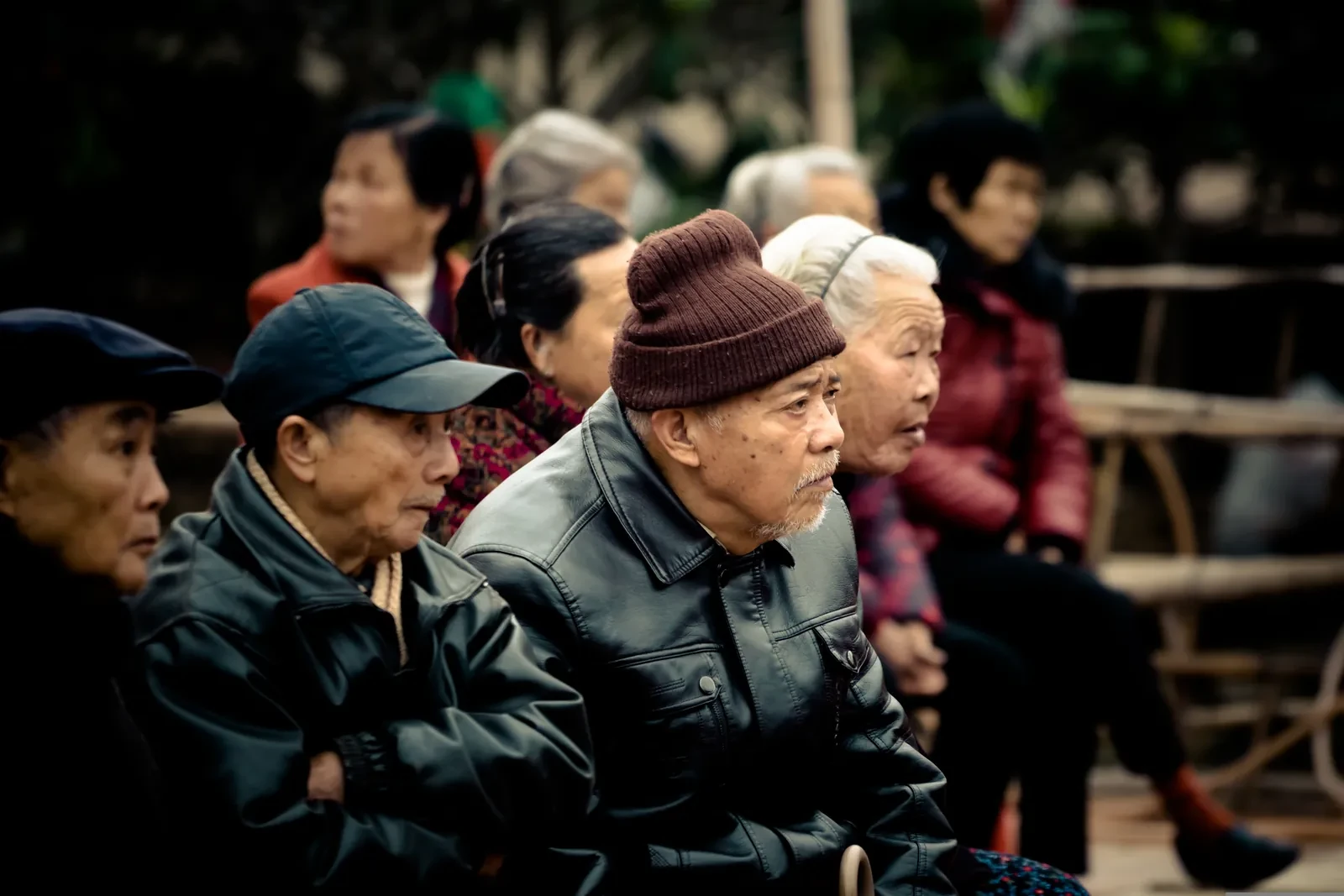
The photograph shows older adults gathered outdoors in China. 志涛 张 released the image under CC0 1.0 through Wikimedia Commons.