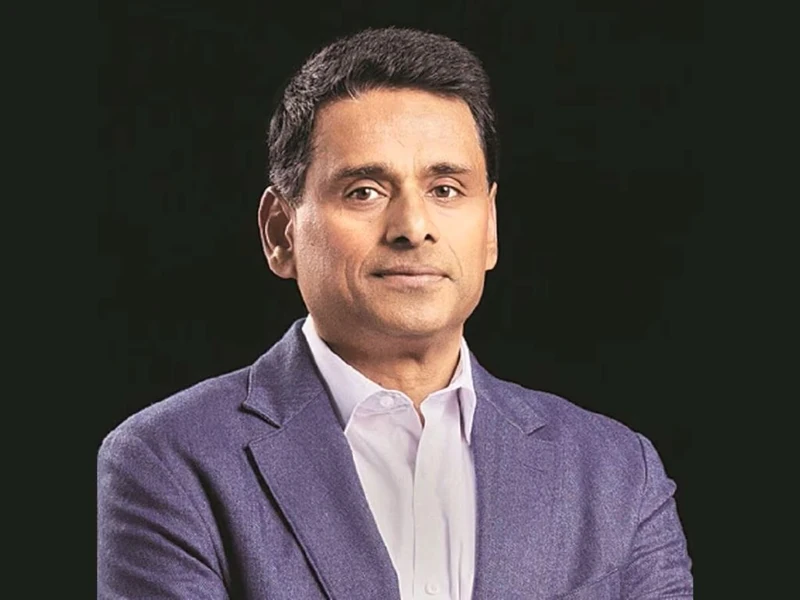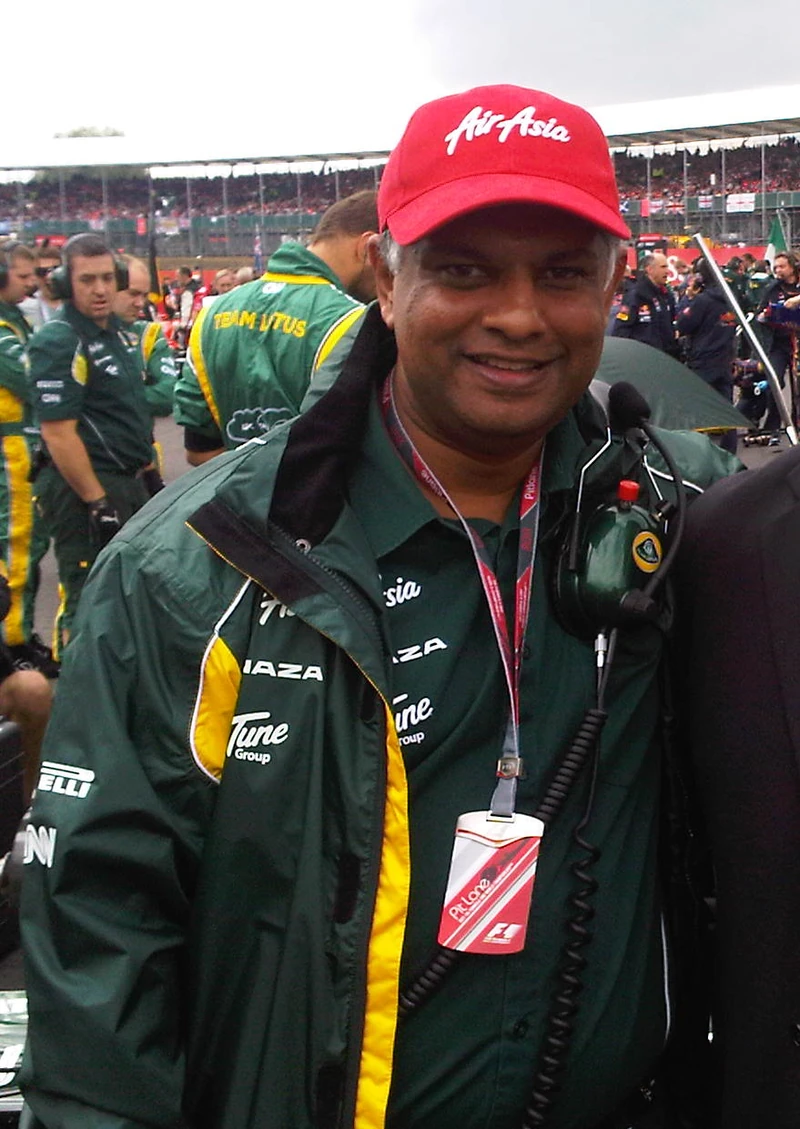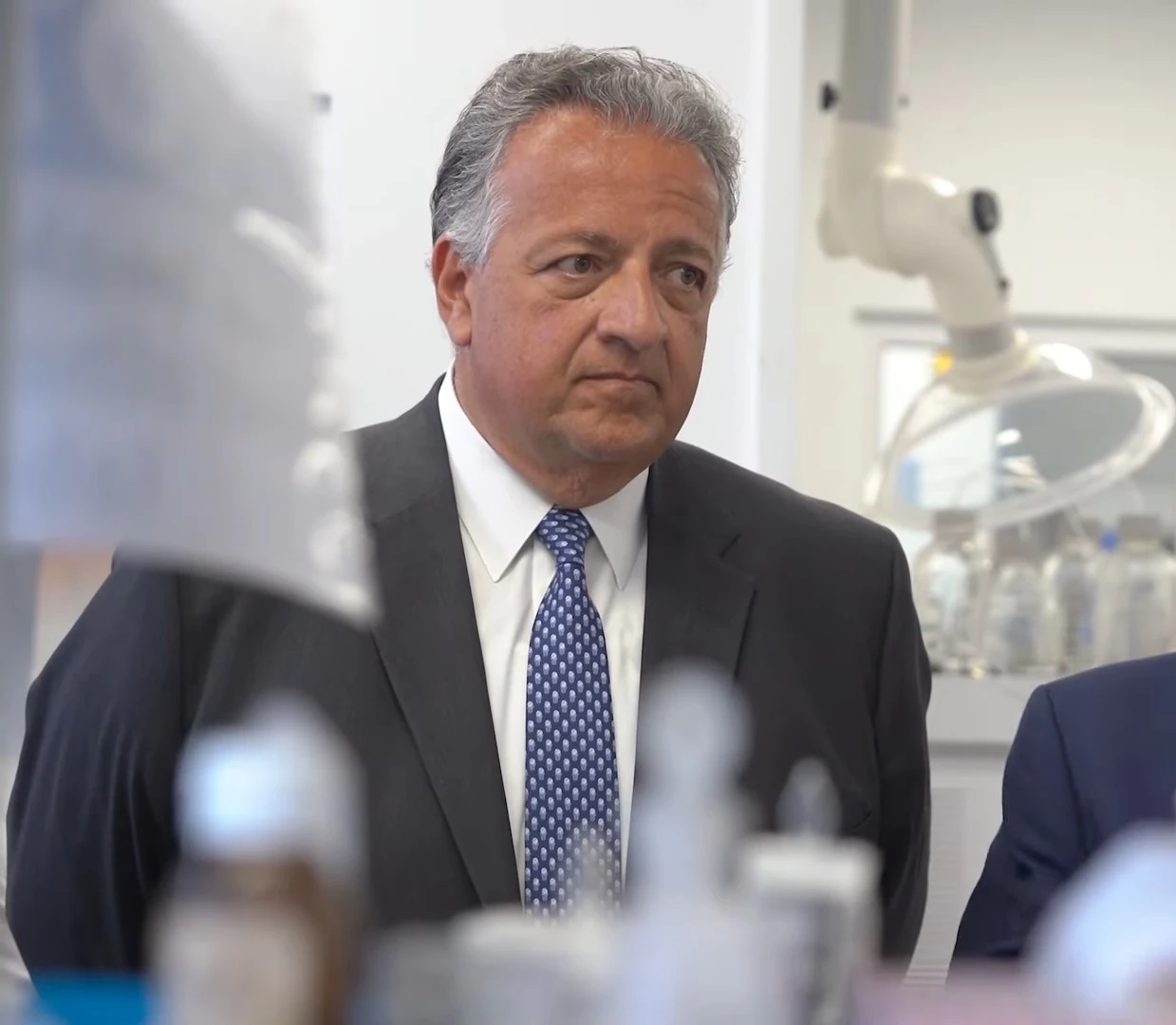
Noubar Afeyan has built Flagship Pioneering around an ambitious proposition: scientific ventures can be invented systematically rather than discovered accidentally. By 2026 the organisation had originated and fostered more than 100 ventures, managed or directed about $14 billion of assets and maintained an ecosystem of more than 40 companies. It also carried the halo and the burden of Moderna, the most visible demonstration that an unconventional platform can become an industrial-scale medical company.
Scale now changes the question. The issue is no longer whether Flagship can generate provocative hypotheses, recruit accomplished founders or finance a wide field of experiments. It is whether the venture factory can translate a larger share of those experiments into products, clinical evidence and durable companies before capital and patience run short. In biotechnology, the distance between an elegant platform and a useful medicine is measured in years, failed trials and repeated financing rounds. Afeyan’s central leadership task is to make that distance economically navigable without domesticating the scientific originality on which Flagship depends.
The firm has ample material with which to attempt it. Its 2024 capital expansion added $3.6 billion, including $2.6 billion for Fund VIII and $1 billion in side funds and strategic partnerships, with a stated ambition to support roughly 25 new companies across human health, sustainability and artificial intelligence. In April 2026, it launched Serif Biomedicines with an initial $50 million commitment to develop modified DNA medicines designed to be programmable, durable and redosable. In June, it formed Terion by combining CIBO Technologies with Indigo Agriculture’s Source business to create an AI-enabled infrastructure layer for agricultural data and verification.
These launches demonstrate conceptual range. They also illustrate why portfolio count is an incomplete measure. Each new platform creates future demands for specialised leadership, laboratories, data, regulatory strategy, manufacturing and follow-on capital. The more ventures Flagship originates, the greater the risk that scarce operational attention becomes the real constraint. A company-creation system can scale ideation faster than the world can scale experienced biotech executives or clinical-development capacity.
Capital is abundant only at the centre
Flagship’s own capital base provides resilience during a difficult financing cycle, but portfolio companies eventually encounter the market. Public biotechnology investors have become more selective, funding costs remain sensitive to clinical setbacks and strategic buyers can choose among many assets. A platform company that once attracted capital on the breadth of its technology increasingly needs a clearly prioritised product, a credible development path and evidence that the platform can produce more than scientific optionality.
Afeyan’s model therefore faces a productive tension. Flagship creates companies around broad capabilities because a platform can generate several products and adapt as science evolves. Yet outside investors often value near-term focus because one well-designed programme is easier to diligence, finance and advance. The answer cannot be to abandon platforms. It must be to define decision points at which a broad exploration becomes a disciplined portfolio, and at which a weak programme is stopped rather than protected by the romance of the founding thesis.
This requires a harder internal language of evidence. Technical milestones should test the most important assumptions early. Capital should follow information gained, not merely time elapsed. Platform validation should include manufacturability, delivery, safety and unit economics, not only biological activity. Where a company has several plausible applications, management should select the one that best proves the underlying capability and creates a path to financing. The venture factory adds value when it can terminate an attractive idea as intelligently as it starts one.
Serif is a useful example. Modified DNA aims to combine characteristics associated with mRNA and gene therapy while reducing limitations around duration, redosing and delivery. The scientific ambition is substantial, and the company reported preclinical evidence in non-human primates ahead of launch. The value-creating sequence now depends on reproducibility, safety, tissue targeting, manufacturing consistency and selection of an initial indication where the modality offers a meaningful advantage. A platform label does not waive any of those requirements.
AI must reduce experimental waste, not decorate the portfolio
Flagship has made artificial intelligence a horizontal capability through Pioneering Intelligence and a vertical company-building theme. Lila Sciences, unveiled in 2025 with $200 million of committed seed financing, combines AI models with automated laboratories in an effort to run cycles of hypothesis, experiment and learning at greater speed. Extuitive applies agentic systems to consumer-product design and marketing. Other companies use computation in protein design, disease biology and drug discovery.
The business case for AI in science is not that it generates more ideas. Biology already supplies more plausible ideas than the industry can test. The case is that AI can improve the quality of prioritisation, shorten experimental cycles and expose failure earlier. To prove that, Flagship needs measures that connect model performance to laboratory and development outcomes: fewer experiments per validated candidate, shorter time to a decision, higher success rates at defined gates, or lower cost for comparable evidence.
An April 2026 collaboration with Amazon Web Services is strategically relevant because compute, data architecture and secure scaling are infrastructure problems as much as scientific ones. Partnerships with IQVIA across analytics, clinical development and asset valuation address a later part of the translation chain. The combination suggests a more integrated model in which Flagship originates a platform, provides shared computational capability and connects companies to development expertise before operational gaps become expensive.
That integration must preserve accountability. Shared services can reduce duplication, but they can also blur ownership of decisions. A portfolio chief executive must remain responsible for programme selection and execution, even when central teams supply models, data or regulatory support. Afeyan’s organisation will be strongest if its common infrastructure accelerates independent companies rather than turning them into dependent departments of a large laboratory.
Partnerships are becoming part of the operating model
Flagship has expanded relationships with large pharmaceutical, technology, research and health-system partners. Its framework with GSK produced feasibility agreements involving ProFound Therapeutics and Quotient Therapeutics. Its work with IQVIA covers development strategy, clinical execution and early commercial assessment. A five-year collaboration with institutions in Singapore is designed to support research projects across health and sustainability, while a June 2026 memorandum with Saudi Arabia’s Lean Business Services explores AI-enabled biomedical research using national health-data capabilities.
These arrangements can solve real bottlenecks. Pharmaceutical partners bring disease knowledge, development infrastructure and potential product rights. Health systems provide clinical context and data. Technology partners offer scalable compute. International research centres widen access to talent and patient populations. For Flagship, partnerships also allow some risk and cost to be shared without forcing every young company to build a complete organisation.
The danger is partnership theatre: announcements that signal access but do not produce programmes with budgets, owners and timelines. Afeyan should judge collaborations by the number and quality of decisions they enable, not by the prestige of the counterparties. Each framework needs a mechanism for selecting projects, governing data, allocating intellectual property and stopping work. In healthcare, privacy and sovereignty requirements are not secondary details, particularly when national datasets and AI are involved.
Asia and the Middle East are especially consequential. Singapore offers research quality, clinical infrastructure and a gateway to varied Asian populations. Saudi Arabia is investing in health data and domestic life-sciences capability. Other markets combine manufacturing scale with growing scientific talent. Flagship can become more global without merely exporting Cambridge companies if it creates ventures and programmes that reflect local strengths. That demands durable teams on the ground and equitable governance, not occasional delegations.
The next flagship outcome must be plural
Moderna proved that Flagship could help create a company of extraordinary consequence. It also created concentration in the public understanding of the firm. A mature venture system cannot rely on one historical success to validate an expanding pool of capital. It needs several independent demonstrations across modalities and sectors: medicines that survive clinical testing, agricultural tools that customers pay for, AI systems that improve experimental productivity and companies that can finance themselves on credible terms.
Afeyan’s personal strength has been his willingness to frame questions that appear unreasonable until a platform emerges around them. At Flagship’s present scale, leadership also requires institutional restraint. Resource-allocation committees must challenge founder conviction. Operating partners must have authority to narrow or end programmes. Portfolio boards must distinguish scientific possibility from investable progress. Incentives should reward useful negative answers as well as company launches.
A practical scorecard for 2026 and beyond would track more than funds raised or ventures formed. It would include the time from origination to a decisive experiment, the proportion of platforms that produce a development candidate, the cost of reaching clinical proof, the quality of external co-investment and the number of programmes advanced through substantive partnerships. For non-health ventures, it would examine customer adoption and repeatable economics. Such measures would make Flagship’s claim of systematic invention more falsifiable, and therefore more credible.
Flagship has assembled the capital, scientific community and partnership network to attempt something rare: industrialising the formation of breakthrough companies without reducing discovery to an incremental corporate process. The organisation’s next chapter will be determined by translation. Afeyan must show that imagination at scale can be matched by selection, execution and patience at scale. If he succeeds, the venture factory will be more than a prolific source of companies. It will be an institution capable of turning uncertainty into useful, repeatable progress.