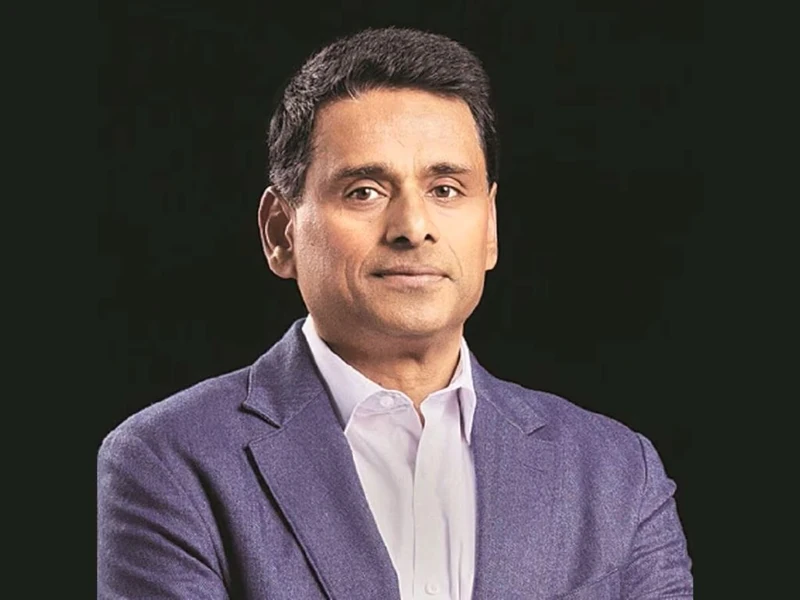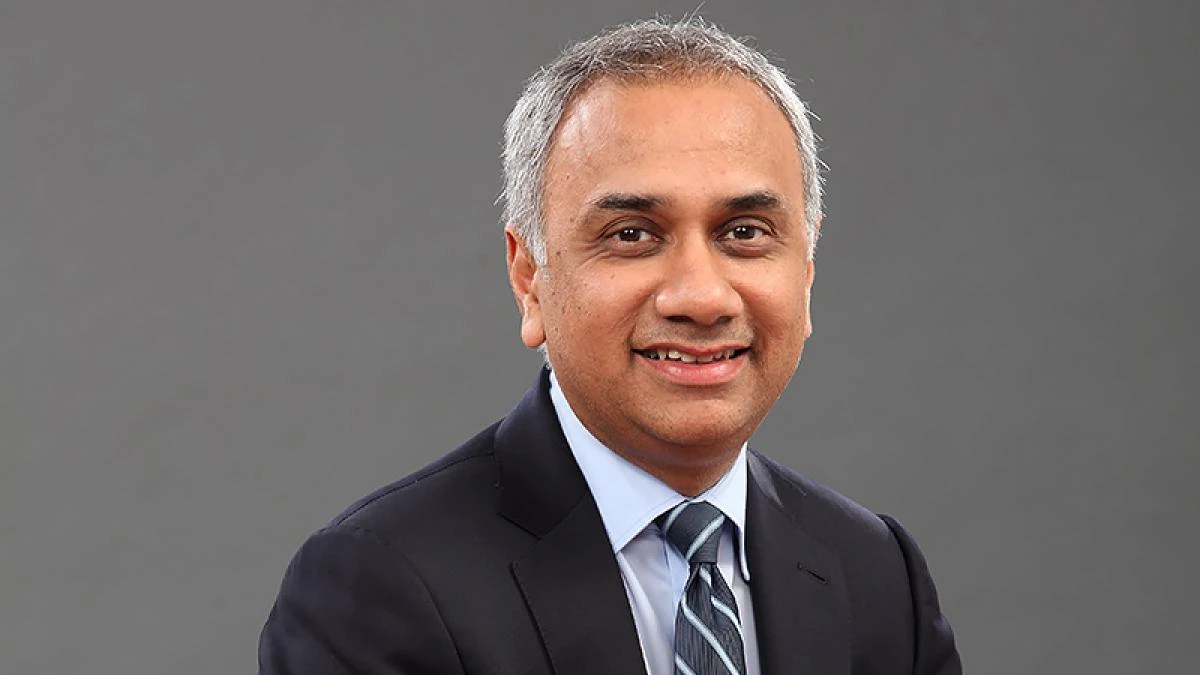
Infosys entered the 2027 financial year with two apparently contradictory signals. The company had just crossed $20 billion in annual revenue, produced robust free cash flow and accumulated $14.9 billion of large-deal contract value. Yet its guidance for the current year envisaged constant-currency growth of only 1.5 to 3.5 per cent. For Salil Parekh, the contrast captures the strategic problem facing the Indian technology-services model: clients are investing in artificial intelligence, but they increasingly expect that investment to reduce the amount of labour and time required to produce an outcome.
For the year ended March 2026, Infosys generated $20.158 billion of revenue, up 3.1 per cent in constant currency. Reported operating margin was 20.3 per cent and adjusted margin was 21 per cent. Free cash flow reached $3.733 billion, while 55 per cent of large-deal value was net new. These are not the numbers of a company under immediate pressure. They are the resources of a company that can choose to disrupt its own delivery system before customers or more specialised competitors force the change.
Parekh has organised the AI proposition around Topaz and a set of services intended to help enterprises modernise, build agents and control model costs. The technology direction is credible. The commercial question is more difficult. If a project that once required one hundred people can be completed by seventy, billing the same hourly rates for fewer people reduces revenue. Charging for the result can preserve or expand value, but it transfers more execution risk to Infosys and demands reliable measurement. The transition therefore touches contracts, sales incentives, talent, margins and the way the company reports progress.
The productivity paradox has arrived
Technology-services groups have always sold efficiency, but their own economics have remained linked to people, utilisation and billing rates. Generative and agentic AI challenge that relationship more directly than earlier automation. Software development, testing, documentation, support and process work can all be accelerated. Clients will expect part of the saving, while competitors will promise more. Infosys cannot defend a model that prices effort when the market is buying reduced effort.
The answer is not to abandon time-based work immediately. Many programmes are too complex or uncertain for pure outcome pricing, and clients may not control the dependencies required to guarantee results. Parekh should segment the portfolio. Mature, repeatable services can move towards fixed, consumption or outcome-linked pricing. Transformation programmes can combine a base fee with milestones and shared benefits. Highly uncertain advisory work may remain time based. The important change is to make pricing reflect the productivity available in each category rather than allow legacy contracts to hide it.
This requires better baselines. To share the value of AI-enabled improvement, Infosys and its clients must agree on the previous cost, quality, speed and risk. Weak measurement creates disputes and encourages conservative automation. Strong telemetry can show fewer incidents, faster releases, lower processing cost or improved conversion. It also allows the company to reuse proven assets and price them as intellectual property rather than repeatedly sell the labour required to rebuild them.
Topaz Fabric and model partnerships can support that reusable layer. A composable approach lets clients choose models while Infosys supplies governance, data integration and agents. That reduces dependence on any single foundation-model provider and addresses enterprise concerns about cost and risk. But composability can also become complexity marketed as flexibility. Parekh should insist that every architecture reduces total operating burden and has a clear owner after deployment.
Large deals must become better deals
The $14.9 billion of annual large-deal wins demonstrates client access and sales execution. Contract value, however, is an incomplete measure when projects include aggressive productivity commitments, transition costs and long ramp-up periods. An AI-enabled deal can look large at signing and prove unattractive if savings are promised before the delivery system is ready. Infosys needs to price uncertainty, stage commitments and track the margin maturation of each cohort.
The 55 per cent net-new component is encouraging because it suggests market-share opportunities rather than mere renewals. Yet new relationships involve greater transition and knowledge-acquisition costs. Parekh can improve economics by standardising discovery, migration and governance tools across deals. Reuse is the bridge between client-specific work and scalable growth. Without it, AI becomes another skill sold through the same labour-intensive model.
The fiscal 2027 margin guidance of 20 to 22 per cent provides a useful constraint. It allows investment but does not give the transformation an unlimited exemption from returns. Reported margin in the previous year included the effect of India’s labour-code provisions; adjusted performance was stronger. Going forward, investors need to see whether AI productivity offsets wages, training, sales investment and the cost of computing. A stable margin supported by genuine delivery improvement is more valuable than one protected by delayed hiring or discretionary cuts.
Cash generation gives Parekh options. Infosys can invest in platforms, acquisitions, talent and partnerships while returning capital. Each choice should be tested against the same objective: increasing the share of revenue derived from repeatable capability and business outcomes. Buying a specialist firm can accelerate industry expertise, but only if its methods are integrated across the broader client base. Accumulating niche brands without delivery reuse would add complexity rather than strategic depth.
Talent must move faster than headcount
Infosys ended the year with more than 325,000 employees and recruited over 20,000 graduates. That hiring matters in a period when some assume AI eliminates the need for entry-level talent. The real issue is the shape of work. Graduates can use AI to become productive more quickly, but only if they learn systems, industries and judgement rather than rely on generated answers they cannot verify. A weaker apprenticeship pipeline would eventually damage the senior expertise on which complex transformations depend.
Parekh needs a workforce model that separates skill development from simple labour substitution. Routine tasks should be automated, while employees move into architecture, data, security, change management and domain work. Training should be tied to project deployment and assessed through outcomes, not course completions. Managers must redesign teams so that AI changes workflow; adding tools to an unchanged hierarchy produces limited benefit and can increase review costs.
Utilisation metrics will need interpretation. A smaller team completing work faster may appear less productive under measures built around billable hours, even when client value improves. Sales commissions and delivery incentives should reward margin, reuse, quality and expansion rather than headcount placed. If internal systems continue to value effort, employees will rationally resist tools that reduce it.
The labour transition also carries cultural and social risk. Infosys has a large role in India’s graduate employment market. Rapid displacement would affect trust and the future talent pool. Parekh does not need to preserve tasks that technology can perform, but he should provide credible routes into new work and communicate how productivity gains support competitiveness. Managed well, AI can increase the value of junior talent; managed narrowly, it can hollow out the company’s learning system.
Clients are buying accountability
Enterprise interest has shifted from model demonstrations towards production systems. Clients want agents that operate across old applications, fragmented data and regulated processes. The constraint is rarely access to a model. It is accountability: who validates an action, protects data, monitors drift and intervenes when the system fails. Infosys can occupy that role because it already understands client estates and runs critical operations.
That position creates liability as well as revenue. Outcome-based contracts and autonomous systems expose Infosys to failures it may not fully control. Contract design must allocate responsibility among the client, model provider, cloud platform and integrator. Technical controls need audit logs, human escalation and rollback. Insurance and financial risk limits should evolve with the scale of deployment. Parekh should be willing to refuse use cases where governance is weaker than the promised autonomy.
The company’s broad partnerships are an advantage if they preserve client choice. They become a weakness if sales teams assemble whichever products carry incentives without a coherent architecture. Infosys should be model-neutral in principle and evidence-led in selection, testing models for cost, accuracy, security and jurisdiction. The value lies in integration and judgement, not in acting as a reseller for the loudest ecosystem partner.
A slower outlook can force a better transition
The current growth guidance reflects macroeconomic caution, longer decisions and pressure in discretionary spending. It also lowers the tolerance for transformation theatre. Every new platform and AI unit must contribute to bookings, delivery economics or client retention. Parekh can use the slower environment to standardise tools, renegotiate incentives and move contracts towards models that will support the next cycle.
Infosys has several protections: a strong balance sheet, trusted enterprise relationships, cash flow and a margin structure that permits investment. The risk is not sudden irrelevance. It is gradual commoditisation if productivity gains flow entirely to clients and model providers while Infosys continues to compete on execution capacity. Avoiding that outcome requires ownership of methods, accelerators and measurable business improvement.
Parekh’s test is to make the company smaller in effort and larger in value. That may mean accepting lower revenue on some legacy work while securing longer, more profitable relationships around AI-led operations. It will require reporting that distinguishes AI-assisted delivery from revenue genuinely created by new services. Broad claims that all work is AI-infused will become less informative as the technology becomes standard.
The $20 billion milestone proves the resilience of the model Infosys built. The next milestone should not be defined only by scale. It should show that the company can grow when clients pay for outcomes rather than armies of engineers. In 2026, Parekh has the capital and credibility to begin that reinvention deliberately. Waiting for stronger demand would make the eventual change faster, harsher and more likely to be priced by someone else.