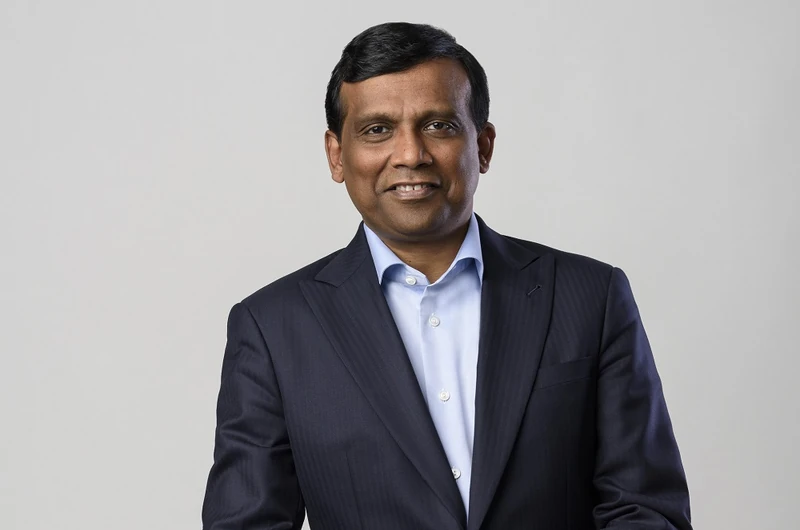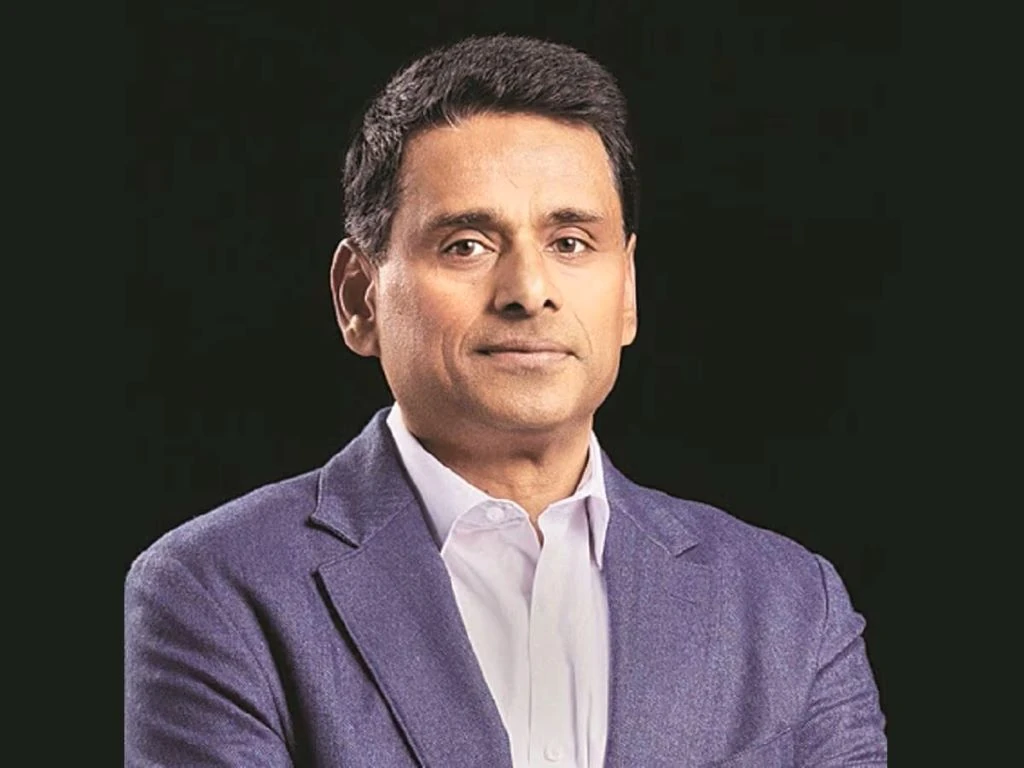
Wipro’s June-quarter results presented Srini Pallia with a familiar but increasingly urgent contrast. Large-deal bookings reached $1.626 billion, up 12.9 per cent sequentially in constant currency, and the company signed thirteen large agreements. Yet IT-services revenue fell 1.4 per cent from the previous quarter and increased only 1 per cent year on year in reported dollars. Constant-currency growth was 0.9 per cent year on year and a 1.2 per cent sequential decline. Demand exists, but it is not yet producing the growth or operating leverage that would validate the current investment cycle.
Group gross revenue was ₹244.8 billion, up 10.6 per cent year on year, while net income rose 0.6 per cent to ₹33.6 billion. IT-services operating margin fell 1.3 percentage points sequentially to 16 per cent as salary increases and future-oriented investment took effect. For the September quarter, Wipro expects constant-currency services revenue to range from a 1.5 per cent decline to 0.5 per cent growth. Pallia therefore has little room for a strategy that remains perpetually ahead of the income statement.
His direction is to make Wipro consulting-led and AI-powered, using Wipro Intelligence, WINGS and WEGA to move clients towards AI-enabled operating models. The company has also described a transition towards services-as-software through an AI Native Business and Platforms unit. The logic is sound: embed reusable agents and platforms in delivery so that productivity becomes an asset rather than merely a reason for clients to demand lower prices. The challenge is to execute that shift while a subdued revenue base absorbs the cost.
Bookings need to convert faster and better
Large deals are valuable because they provide visibility, scale and access to core client operations. Wipro’s first-quarter wins covered vendor consolidation, geospatial data, software quality, healthcare technology, insurance, supply chains, energy operations and enterprise modernisation. Many involve cost reduction and AI-enabled automation. This aligns with client priorities in an uncertain economy, but such deals can carry long transitions and demanding productivity commitments.
Pallia must improve both conversion speed and margin maturation. A contract may be booked at its total value while revenue arrives over several years. Early phases often require duplicate teams, knowledge transfer, platform investment and client-specific restructuring. If start dates slip or savings assumptions prove optimistic, the order book can look stronger while near-term economics deteriorate. Management should track cohorts from signing through transition to normalised margin and identify the causes of delay.
The thirteen large deals also increase execution complexity. Wipro needs common transition tools, governance and reusable AI components so that each win does not create a bespoke mobilisation. Standardisation can lower risk, but client estates and regulated processes differ. The operating model should define a common core and price genuine customisation explicitly. Unpriced variation is one of the fastest ways for a large deal to disappoint.
Total bookings of $3.37 billion declined 2.4 per cent sequentially in constant currency even as large deals improved. That mix suggests dependence on fewer substantial programmes. Large contracts can transform accounts, but they also increase concentration and renewal risk. Pallia should maintain a healthy flow of smaller, faster projects that can expand, particularly in data, security and AI engineering. They provide proof and revenue while the largest transitions mature.
Margin pressure must buy a capability
The fall to a 16 per cent services margin is defensible only if the spending creates repeatable productivity or better growth. Salary increases are part of maintaining talent. Investment in AI platforms, sales and delivery can strengthen the future. But management needs to distinguish temporary costs from a structurally lower margin caused by pricing pressure and inefficient execution.
Operating cash flow equalled 98 per cent of net income in the quarter, showing that reported earnings remain well supported. The interim dividend of ₹2 a share also maintains shareholder returns after a substantial buyback programme. These cash commitments impose discipline. Pallia must allocate enough to the transition without treating Wipro’s balance sheet as a buffer for weak contract economics.
A credible margin bridge would identify wage effects, acquisition and platform investment, utilisation, pricing, automation and delivery improvements. Investors should be able to see when specific investments begin to pay back. Broad statements about an AI-first future are insufficient when guidance implies little sequential growth. The standard should be whether Wipro Intelligence reduces proposal time, transition cost and ongoing effort across multiple clients.
The company should also resist recovering margin through indiscriminate cuts. Reducing sales or training can produce a short improvement and weaken conversion. Lower staffing can damage service if automation is not ready. The more durable route is to simplify layers, reuse intellectual property, improve account accountability and price risk. That requires operational detail rather than a single cost target.
Services-as-software needs a real commercial model
The phrase services-as-software describes an important ambition: codify expertise into platforms and agents that can be deployed repeatedly. WINGS and WEGA appear in first-quarter client programmes covering managed services and software development. If they shorten delivery and improve quality, Wipro can charge through subscriptions, consumption or outcome-linked fees while reducing dependence on headcount.
But internal platforms do not acquire software economics automatically. They need product ownership, release discipline, security, documentation and adoption beyond the accounts that funded them. Wipro must decide whether clients license the tools, receive them as part of a service or pay for measured outcomes. Ambiguity can lead to development costs at the centre while account teams discount the capability to win work.
Intellectual-property rights are another issue. Agents trained or configured using client processes may not be reusable without permission. Contracts should separate Wipro’s underlying platform from client-specific data and logic. Strong boundaries protect confidentiality and make reuse legally credible. They also help clients understand that portability and control are not being exchanged silently for a lower price.
Capco gives Wipro consulting access in financial services and other regulated work. Consulting can identify the business changes required for AI, while Wipro delivers and operates them. That combination is valuable if teams work as one commercial unit. If consulting ends with a recommendation and delivery competes separately, the group loses the advantage. Pallia should measure how often advisory work converts into successful implementation and whether the combined engagement earns an adequate return.
The workforce must see a reason to automate
Wipro has more than 230,000 employees and trailing voluntary attrition of 13.9 per cent. AI changes the work available to them and the incentives governing it. Delivery managers who are judged by team size and revenue may resist automation. Engineers may worry that creating a reusable tool makes their current role unnecessary. Sales teams may give away productivity to secure a signature.
Pallia needs incentives that reward margin, quality, reuse and client expansion. Employees who build components used across accounts should share recognition and career value. Teams should be measured on outcomes rather than effort. Without that redesign, the company will invest in platforms while the operating system continues to favour labour.
Training must move beyond general AI familiarity. Healthcare, insurance, chemicals and energy engagements require domain controls and regulatory judgement. Staff need to know when an agent can act, when human approval is required and how to investigate failure. Wipro can build specialised assurance capability that differentiates its services, particularly as clients move from pilots into critical operations.
The salary increase that affected first-quarter margin is also an investment in retention. The company should link compensation more closely to scarce skills and performance rather than apply blunt structures that raise cost without changing capability. At the same time, it should preserve graduate development. AI may compress routine work, but future architects and leaders still need supervised experience of real systems.
Pallia’s second year requires visible causality
Wipro’s challenge is not a lack of strategic language or market opportunity. It has major enterprise relationships, industry knowledge, consulting, engineering and a broad technology ecosystem. It is winning large work. The gap lies between those inputs and consistent organic growth. Pallia must make the causal chain visible: investment creates capability, capability improves win rates and delivery, and delivery produces revenue, margin and cash.
The September-quarter guidance suggests that improvement will not be immediate. That makes selectivity essential. Wipro should favour deals where it can control delivery, reuse technology and price outcomes. Revenue that requires years of under-margin transition may not be preferable to smaller work with expansion potential. The order book should be evaluated by cash economics, not just headline value.
AI offers Wipro a chance to reset its competitive position because the entire industry is redesigning delivery. It also raises the cost of slow execution. Rivals are building similar platforms, cloud providers are moving into services and clients are developing internal teams. Tools will not remain differentiated for long; implementation speed, governance and domain expertise must carry the advantage.
Pallia can justify the current margin pressure if Wipro emerges with a more productive and repeatable model. He cannot allow investment to become a standing explanation for weak growth. The first quarter of 2027 produced stronger large-deal evidence and weaker near-term economics. In 2026, his leadership will be judged by how quickly those two lines converge.