Thailand’s Deputy Prime Minister Yodchanan Wongsawat asked Korean companies to invest in biotechnology, medical devices, vaccines, wellness and future food at a business forum in Seoul on July 22. He said the government would support partners through joint incubation, joint investment and business matching as Thailand tries to expand beyond agriculture into higher-value industries.
The pitch came with a market figure. Vice Minister for Foreign Affairs Sarun Charoensuwan said Thailand’s wellness economy reached $42.7 billion in 2024. Officials also presented a domestic market of about 70 million people, established healthcare infrastructure and access to the wider Association of Southeast Asian Nations as reasons for Korean companies to locate work in the country.
Thailand is not offering only a sales market; it wants to become the development, trial and manufacturing base through which Korean health companies enter Southeast Asia. That proposition will be tested by registered investment, joint clinical programs, technology transfer and factories entering operation. Forum attendance and memorandums cannot substitute for those outcomes.
The clinical-trial claim needs comparable evidence
Suthira Taychakhoonavudh, chief executive of Thai biopharmaceutical company Baiya Phytopharm, told the forum that Thailand has the largest number of clinical trials among ASEAN countries. She cited available land, medical infrastructure, a sizeable population and relatively quick registration and regulatory procedures as advantages.
Clinical-trial capacity can attract biotechnology investment because it shortens the distance between laboratory work and regional evidence. Diverse patient populations, experienced hospitals and investigators allow sponsors to test whether products work across the people expected to use them. A credible regulator can also make data more acceptable in other markets.
The claim should still be read carefully. Trial counts vary depending on whether researchers include recruiting, completed, observational or interventional studies and whether each country registers consistently. Volume does not establish quality, speed or representation. The most useful public metrics would include approval times, enrolment rates, completion, inspection findings and the number of results accepted by other regulators.
Korean groups bring strengths in biomanufacturing, diagnostics, digital health and consumer wellness. Thailand contributes hospitals, tourism flows, manufacturing capability and an established medical-services economy. The overlap is real, but the two sides must decide where intellectual property, high-value research and production will sit.
Wellness is large because it is broad
The $42.7 billion figure signals opportunity, but wellness includes many activities with different economics: hospitality, spas, preventive services, nutrition, fitness, beauty and medical travel. It should not be interpreted as an addressable biotechnology market. Investors need narrower demand data for devices, medicines, diagnostics or specific services.
More than 1.5 million Korean tourists visit Thailand each year, Charoensuwan said. That flow can support wellness services and cross-border consumer brands. It does not automatically produce repeat medical demand, which depends on trust, continuity of care, insurance and post-treatment support.
Medical tourism creates a particular policy tension. International patients can bring revenue and support specialist facilities, yet rapid private-sector expansion can draw staff away from public care. Thailand’s investment program will be more durable if it expands training and capacity rather than merely reallocating clinicians toward higher-paying visitors.
Vaccine development offers a different model. It requires laboratories, clinical networks, regulatory expertise, cold-chain logistics and advance purchasing. The social value can be high, but manufacturing plants need steady demand between outbreaks. India’s recent clearance of Takeda’s QDENGA showed that approval is only the first step; dosing, surveillance, procurement and public confidence determine impact.
Incentives cannot replace a regulatory path
Uthaiwan Watanasuvakul, a senior adviser at Thailand’s Board of Investment, highlighted infrastructure, skilled labour, supply chains, digital readiness, competitive costs and tax and non-tax incentives. Those factors can improve a project’s initial economics. Health products, however, face long timelines and quality obligations that make institutional reliability more important than a short tax holiday.
A company choosing a regional base will examine product-registration rules, data protection, biologics standards, patent enforcement and reimbursement as closely as factory cost. It will also ask whether approvals in Thailand create a practical route into other ASEAN markets, where rules and purchasing systems remain fragmented.
Joint incubation can help early companies navigate those barriers if it includes laboratories, regulatory advice, hospital partners and follow-on funding. A branded accelerator with no purchasing pathway or specialist facilities will add meetings rather than capability. The government should publish selection criteria, private co-investment and milestones for any program created after the forum.
Technology transfer is another unresolved issue. Thailand wants higher-value domestic activity; Korean companies will protect manufacturing processes and intellectual property. Agreements can balance those interests through local training, contract manufacturing, licensed production and shared development. The balance should be visible in skilled jobs, domestic supplier spending and research work performed locally.
Regional competition is already intense
Singapore offers deep financing and a concentrated biomedical cluster. South Korea has large health companies and strong research capacity. Malaysia, Indonesia and Vietnam are expanding manufacturing and health markets. Thailand’s differentiator is the combination of tourism, clinical infrastructure, manufacturing and central geography, but each element has competitors.
The country can strengthen its position by focusing on areas where the combination matters. Tropical-disease vaccines, hospital-linked diagnostics, healthy ageing, medical devices for regional price points and evidence-based wellness products are more defensible than a general promise to host all biotechnology.
Readers following Vertex’s expansion beyond cystic fibrosis and Feng Zhang’s shared rare-disease platform will recognise the same translation problem: scientific capability becomes a health business only after manufacturing, regulation and access align.
The Seoul forum has supplied named sectors, government sponsors and an on-record invitation. The next 12 months should supply harder evidence. Board of Investment approvals can show committed capital; trial registries can show new joint studies; company filings can identify manufacturing; regulatory records can demonstrate product progress. If those measures rise together, Thailand will have converted a $42.7 billion headline into a biotechnology pathway. If they do not, the wellness market will remain a broad attraction rather than an investment thesis.
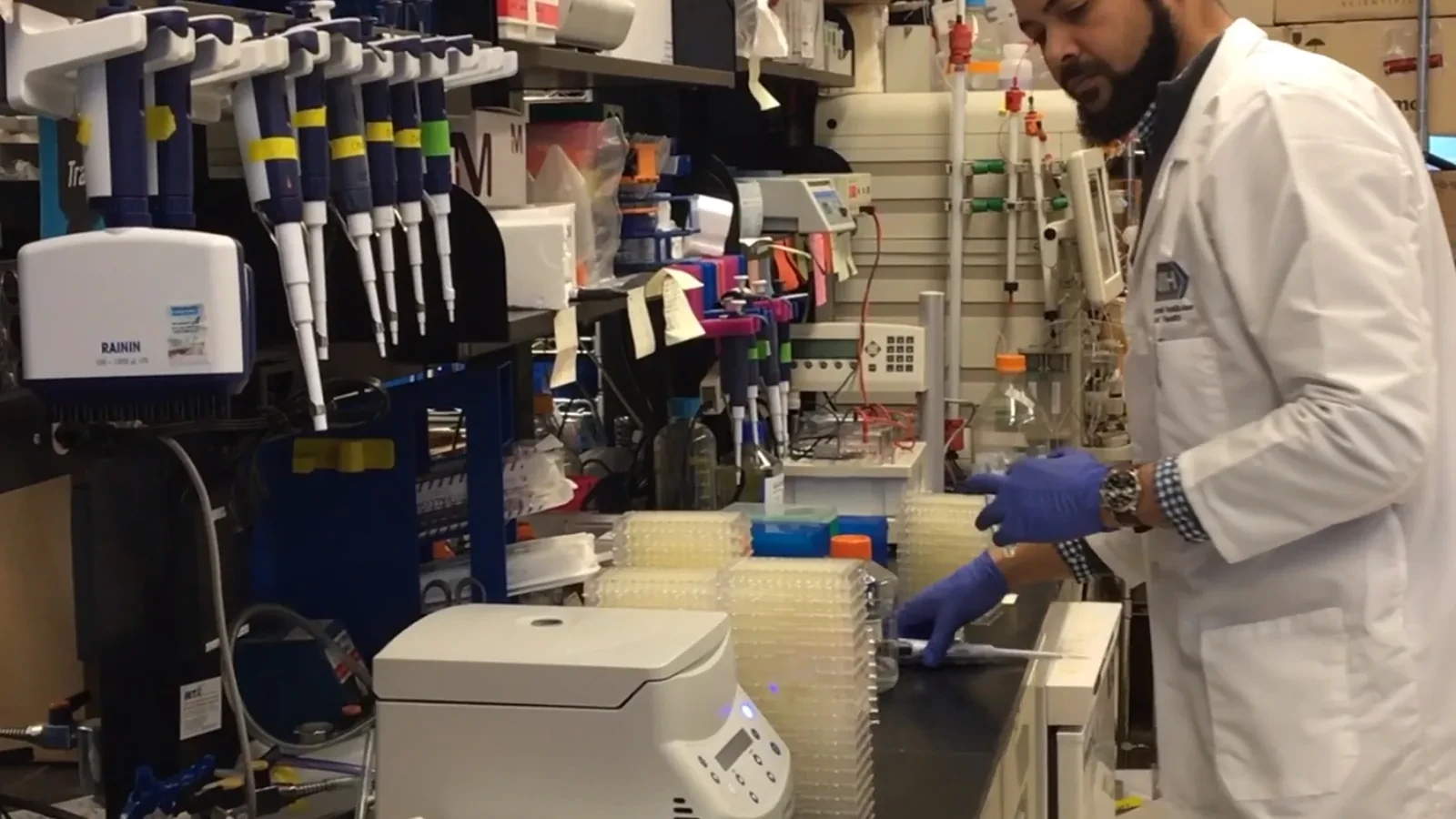
Forum record: July 22 remarks by Yodchanan Wongsawat, Sarun Charoensuwan, Uthaiwan Watanasuvakul and Suthira Taychakhoonavudh, independently reported by The Korea Herald. Photograph: NIAID scientist in a vaccine laboratory, National Institutes of Health; Creative Commons Attribution 2.0, resized and exported as WebP.