Michael Kratsios, the senior U.S. technology official, said on July 22 that China’s Moonshot AI used Anthropic’s Fable model to develop Kimi K3 and had obtained Nvidia GB300 servers that were operated in Thailand. Treasury Secretary Scott Bessent separately said he was considering a trade blacklist designation and sanctions. China’s embassy in Washington called the accusation “entirely unfounded.”
The dispute moves model distillation from an industry argument into a possible enforcement case. Distillation can be a legitimate technique in which a smaller system learns from outputs generated by a larger one. The legal and contractual questions change when access is concealed, automated at scale or used in violation of a provider’s terms. Washington is alleging the latter; it has not publicly released the underlying technical evidence.
The immediate issue is not whether Kimi K3 performs well, but whether the U.S. can substantiate how it was trained and how restricted hardware reached the company. A blacklist entry, sanctions filing or export-control action would turn political statements into a measurable case. Without disclosed evidence, Moonshot’s training record and the Chinese government’s denial remain in direct conflict.
The allegation combines models and chips
Kratsios said the U.S. had information that Moonshot distilled Anthropic’s Fable for K3. Reuters reported his statement and the Chinese embassy response. Moonshot did not immediately comment to the publication. Anthropic public-policy executive Sarah Heck said theft of U.S. models by Chinese groups creates national-security risk.
The second claim concerns computing hardware. Kratsios said Moonshot acquired servers containing Nvidia GB300 accelerators and used them in Thailand, probably for model training. The location matters because U.S. export controls apply through supply chains and can be enforced against intermediaries. A server installed outside China can still raise diversion questions if the buyer, end user or intended workload falls within restrictions.
Neither claim has been tested in court or an administrative proceeding. The embassy’s spokesperson, Liu Chang, said China respects intellectual-property protections and urged U.S. officials to stop discrediting the country’s AI development. That denial is material. It prevents the allegation from being reported as an established fact and places the burden on Washington to show logs, account records, hardware serials, procurement documents or model-behaviour analysis.
Anthropic disclosed in February that DeepSeek, Moonshot and MiniMax created more than 16 million interactions with Claude through about 24,000 accounts, which it said violated its terms and regional restrictions. The figure establishes a prior claim by the model provider, but it does not by itself prove that K3 contains protected elements of Fable or that every interaction was unlawful.
Open weights do not settle training provenance
Moonshot presented Kimi K3 as a 2.8 trillion-parameter open-weight system with performance approaching Anthropic’s frontier model. Open weights allow researchers and developers to inspect and run a model more freely than a closed service. They do not reveal the complete training data, teacher outputs, filtering process or account access used during development.
That gap is central to the dispute. Benchmarks can show that two models behave similarly, but similarity may result from shared public data, convergent engineering or direct imitation. Proving improper distillation requires stronger evidence than comparable scores. Providers can use distinctive response patterns, watermark-like signals, account telemetry and prompt histories, yet each method has limitations.
The commercial incentive is obvious. Frontier training is expensive, while a distilled model can reproduce selected capabilities at much lower cost. A company that avoids the full research bill can offer attractive prices and release quickly. Users benefit from competition, but the market becomes unstable if leading laboratories conclude that every public interface is an extraction channel.
Restrictions can also impose collateral costs. Stronger identity checks, lower rate limits and tighter regional access make misuse harder, but they also burden researchers and smaller developers. Perplexity’s effort to turn search into an agentic computer depends on access to models and external information; a more closed ecosystem raises the cost of building such products.
A blacklist would change customers before code
If the U.S. adds Moonshot to an export or sanctions list, the first effects would be operational. Suppliers, cloud providers, banks and enterprise customers would reassess relationships. Access to accelerators, software updates and dollar payments could narrow before any judgment is reached on the underlying model claim.
The risk extends to companies outside China and the United States. Thailand appears in the allegation as the location of the GB300 systems, demonstrating how AI controls increasingly reach data centres, distributors and financing arrangements across Asia. Governments that want to attract computing investment may also inherit verification duties over end users and workloads.
For Moonshot, an open-weight release creates both reach and scrutiny. Developers can test K3 directly, compare its outputs and inspect parts of the architecture. Independent researchers may find behavioural evidence that supports or weakens the U.S. claim. But public inference testing cannot reconstruct the entire training process.
The broader market is already measuring AI systems through economics as much as capability. NAVER’s agent strategy must show that distribution produces profit, and server suppliers are being judged on delivery and margin rather than order announcements. K3 adds provenance to that list: a model’s value now depends partly on whether customers believe its training and hardware supply chain can withstand regulatory review.
The evidence threshold is now public
Three developments would move the story forward. The first is a formal U.S. designation naming the legal authority and restrictions. The second is technical evidence from Anthropic or the government showing how Fable outputs were acquired and used. The third is a detailed Moonshot response addressing accounts, training data and hardware procurement rather than a general denial from Beijing.
Absent those steps, the dispute remains a serious but unproven allegation. Policymakers may still act on national-security grounds, which do not always require a public trial. Customers and researchers, however, need a clearer record to distinguish competitive distillation, contractual abuse and theft.
Kimi K3’s release demonstrated that Chinese laboratories can bring very large open-weight systems to market quickly. The July 22 statements changed the question from how close K3 is to Fable to how it got there. Moonshot’s next disclosure, and any U.S. enforcement document, will determine whether that question becomes a technical controversy, a trade case or both.
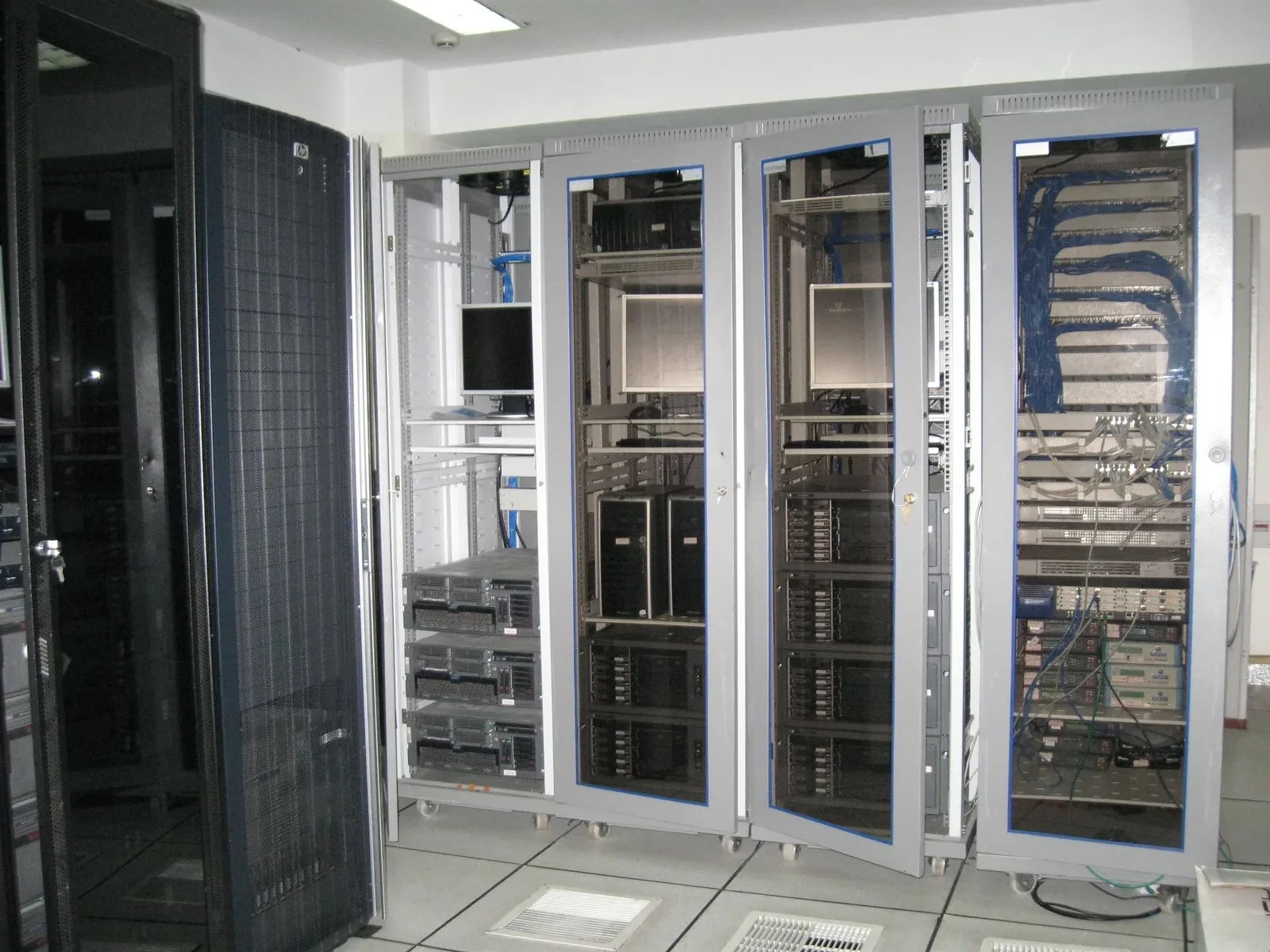
Attribution: statements from Michael Kratsios, Scott Bessent, the Chinese embassy and Anthropic, supported by Reuters and Anthropic’s February disclosure. Photograph: Indian Railway 139 server room, by Indrajit Das, Wikimedia Commons, CC BY-SA 3.0; cropped and converted to WebP.