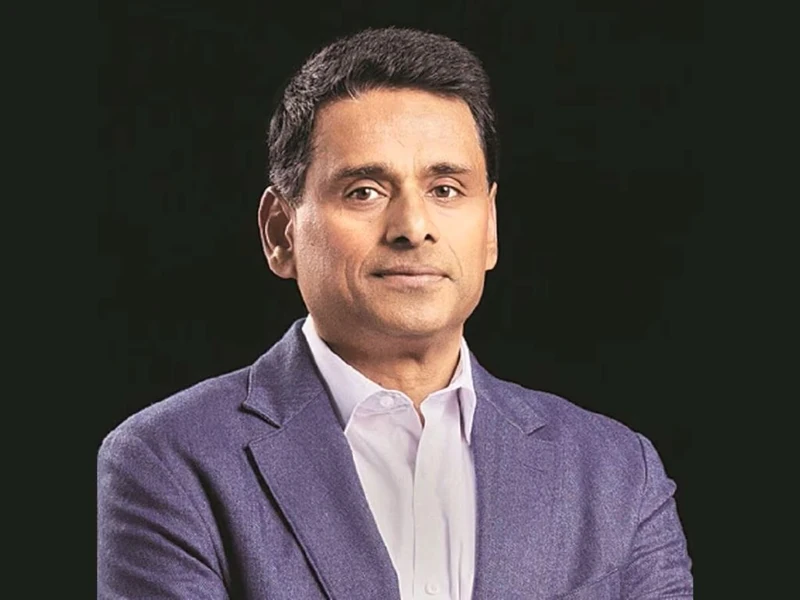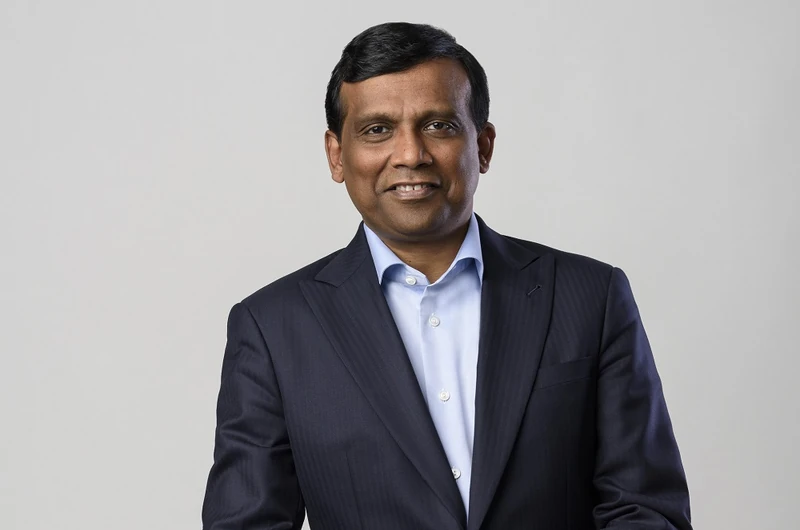
NAVER entered 2026 with a useful advantage over many companies trying to turn artificial intelligence into a business: it already owns the places where millions of people search, shop, advertise, read, pay and communicate. That gives Choi Soo-yeon a distribution system for AI rather than merely a collection of models. It also gives her a more exacting problem. Every intelligent layer added to the platform consumes computing power, changes the way users encounter commercial information and threatens to disintermediate the links and listings on which the existing economics were built.
The first quarter made the opportunity visible. Consolidated revenue rose 16.3 per cent year on year to KRW3.2411 trillion, while operating profit increased 7.2 per cent to KRW541.8 billion. Advertising and commerce benefited from AI integration, and global consumer-to-consumer operations contributed faster growth. Yet profit expanded much more slowly than sales because NAVER was also spending to secure the infrastructure required for AI competitiveness. The divergence is not a warning that the strategy is wrong. It is the central management question of the strategy itself.
Choi must make NAVER more useful before the global model providers make its traditional interfaces less necessary. She must do so while protecting trust in a platform that mediates a large share of South Korea’s digital economy. And she must convert a sovereign AI position, attractive to governments and regulated industries, into durable revenue rather than an expensive expression of technological independence. This is no longer a laboratory exercise. It is an allocation test involving capital, product design and the future shape of the group.
Distribution is NAVER’s strongest AI asset
The most consequential development is not any single model benchmark. It is NAVER’s decision to place agents inside services that already contain intent. The AI Tab introduced in beta during April is designed to move search from a list of answers towards an experience that connects discovery with action. The shopping agent similarly attempts to turn conversational guidance into transactions on NAVER Plus Store. Those products can shorten the path between a question and a purchase, improving conversion for merchants and relevance for users.
That sounds straightforward, but agentic search rewrites the platform’s commercial contract. A conventional search page creates multiple opportunities for exposure and user choice. An agent may synthesise options and recommend only a few. If the recommendation is influenced too visibly by advertising, trust suffers. If it ignores commercial economics, monetisation suffers. Choi therefore needs a new auction and attribution architecture that can demonstrate why a merchant appeared, measure the value delivered and preserve enough competition to prevent the agent becoming a closed gatekeeper.
NAVER has local advantages in language, behaviour, merchant data and service integration. Its knowledge of Korean search intent is difficult to reproduce from a global model alone. The platform can also observe whether a recommendation leads to a product view, booking, payment or repeat purchase. This first-party loop can improve models and commercial outcomes together. The risk is organisational fragmentation: search, advertising, commerce, cloud and payments may each optimise for their own metrics while the user experiences one agent. Choi’s task is to make the group behave like one product without erasing the accountability of its businesses.
The Q1 numbers suggest that AI is already supporting the core rather than waiting for a distant pay-off. But they also establish a demanding comparison. Once management associates present growth with AI integration, investors will expect continued evidence that smarter placement and personalisation lift revenue per user. Infrastructure spending cannot be defended indefinitely as strategic preparation. It needs to produce measurable improvements in engagement, advertiser returns, merchant retention and operating leverage.
Sovereign AI needs a commercial discipline
Choi has also positioned NAVER around sovereign AI: technology designed to respect local language, data rules, institutions and national security priorities. In 2026 the company extended that logic into public infrastructure and defence-oriented collaboration. The proposition is timely. Governments and large enterprises are increasingly reluctant to place sensitive workloads entirely inside a small number of foreign model ecosystems. NAVER Cloud can offer models, cloud capacity, data governance and application expertise as an integrated alternative.
This can create a valuable business-to-business franchise, but sovereignty is not itself a pricing model. Public-sector projects can involve long procurement cycles, demanding customisation and political scrutiny. Private clients want interoperability and measurable productivity, not technological symbolism. NAVER must resist turning every local requirement into bespoke engineering that cannot be reused. The better model is a common platform with configurable controls: language adaptation, residency, auditability, security and domain-specific tools built on repeatable foundations.
The capital burden is substantial. Training and serving advanced models requires chips, data centres, power and specialised staff. Global competitors can spread those costs over far larger markets. NAVER’s answer must be utilisation rather than scale alone. The same infrastructure should support consumer search, commerce agents, enterprise deployments and government work, with capacity allocated according to returns and strategic importance. That makes internal pricing and project selection unusually important. A sovereign AI contract that absorbs scarce computing resources but produces little reusable intellectual property may destroy value even if it generates respectable revenue.
Choi can impose discipline by separating three categories of investment. Core infrastructure should be assessed on utilisation and cost per inference. product investment should be judged by adoption and unit economics. Strategic national projects should carry explicit long-term objectives and risk limits. Blurring the categories would make it easy for weak economics to hide inside a broad AI narrative. Clarity would also help the board decide when partnerships are more rational than ownership.
Global commerce cannot remain a collection of assets
NAVER’s global initiatives add another layer to the equation. Poshmark, Wallapop, KREAM and SODA expose the group to consumer-to-consumer commerce across different markets and categories. Their growth broadens the company beyond Korea and creates data on discovery, pricing and trust that may be useful for AI-assisted shopping. But a portfolio is not a platform merely because its businesses share a shareholder.
The strategic case depends on common capabilities. Visual search, automated listing creation, fraud detection, translation, customer support and personalised discovery can be developed across marketplaces. Payments and advertising may eventually add further links. Choi needs to show that NAVER’s ownership lowers the cost of growth or improves the quality of the experience in ways that independent operators could not match. Otherwise, global initiatives risk consuming management attention while the domestic platform faces its most important transition in a generation.
There is also a tension between localisation and integration. Resale markets are shaped by local fashion, logistics, payment behaviour and regulation. Imposing a Korean product template would be counterproductive. The group should centralise expensive intelligence and safety tools while leaving market-facing decisions close to users. That is a more demanding operating model than either complete autonomy or full integration, but it offers the best chance of preserving entrepreneurial speed while extracting group value.
Capital allocation will reveal whether NAVER has learned from the expensive expansion habits that affected many technology groups during the period of cheap money. The appointment of a chief financial officer to the board in 2026 strengthens the link between strategy and financial oversight. Shareholder returns have also become a stated priority. Those governance changes matter because AI and overseas commerce both offer plausible reasons to spend today for benefits that may arrive later. Choi must establish thresholds that distinguish patience from permissiveness.
The next scorecard must connect intelligence to cash
NAVER’s position is stronger than the defensive language often used about local internet platforms confronting global AI. It has cash-generative services, trusted local brands, a cloud business, rich commercial data and direct relationships with merchants and consumers. It can place agents where users already act. The first-quarter acceleration demonstrates that the existing engine remains healthy enough to finance change.
But the gap between revenue and profit growth shows why execution cannot be judged by launches alone. The relevant scorecard is whether AI lowers the cost of serving users, raises conversion, improves advertising returns and creates enterprise revenue that shares infrastructure with the consumer platform. It should also show whether global marketplaces are benefiting from common technology rather than simply adding sales.
Choi’s leadership challenge is to hold two ideas at once. NAVER cannot protect its economics by preserving the old search experience, because user expectations are changing too quickly. Nor can it pursue agents without protecting the trust, choice and commercial transparency that made the platform valuable. The winning transition will feel evolutionary to users and radical inside the company: fewer product boundaries, stricter investment accounting and a redesigned relationship between recommendations and revenue.
In 2026, NAVER has progressed beyond proving that it can build AI. It is proving that it can distribute it. The decisive question now is whether Choi can turn that distribution into operating leverage before the infrastructure bill and the global competitive cycle outrun the benefits. If she can, NAVER will offer a model for how a regional platform becomes an AI institution without surrendering its local advantage. If she cannot, strong top-line growth may conceal an increasingly costly effort to defend yesterday’s position.