Malaysia and Hong Kong will introduce a simplified route for companies seeking initial public offerings in both markets from September, their securities regulators said after signing a cooperation agreement in Kuala Lumpur on July 23. The arrangement is intended to let an issuer use one core set of documents, including a prospectus, across the two listing processes.
The Securities Commission Malaysia and Hong Kong Securities and Futures Commission also expanded mutual recognition for investment funds, exchange-traded funds and real estate investment trusts. SC chair Dato’ Mohammad Faiz Azmi and SFC chief executive Julia Leung signed the memorandum at the Malaysian regulator’s office. Reuters and The Star separately reported the agreement.
The pact creates a regulatory bridge, not a merged market. From September, eligible companies can pursue a simplified dual IPO process using a common documentation base, while fund-recognition measures effective July 23 broaden the products that can be sold or cross-listed. Success will be visible in actual filings, investor participation and trading liquidity—not in the number of eligible structures.
What changes for issuers
Hong Kong has recognized Bursa Malaysia as a recognized stock exchange, allowing eligible Bursa-listed public companies to seek secondary listings in Hong Kong. For companies preparing a fresh offer in both places, the simplified framework should reduce duplicated drafting and make the timetable easier to coordinate. Regulators will still apply their own laws and review obligations. “One set of documents” is an efficiency measure, not a waiver of disclosure standards.
The commercial proposition is straightforward. Malaysia offers access to domestic savings, a developed Islamic finance market and companies rooted in Southeast Asian growth. Hong Kong offers a deeper international investor pool and proximity to mainland Chinese capital. A dual listing could diversify demand and improve visibility for a Malaysian issuer whose business extends beyond its home market.
Those benefits are not automatic. Two trading venues can fragment volume, create price differences and add continuing compliance costs. Currency exposure and settlement arrangements also matter. An issuer will choose the route only if the additional demand is likely to exceed the expense of maintaining both listings. The coming months should show whether advisers can turn the procedural simplification into a credible underwriting proposition.
Funds may move before IPOs
The agreement’s fund provisions take effect sooner. The regulators said mutual-recognition policies were effective from July 23 and would cover a wider range of exchange-traded products, including futures-based, leveraged and inverse ETFs as well as commodity products. Cross-listing arrangements for REITs are also part of the package.
Funds may provide the quicker test because an established manager can adapt an existing product without waiting for a company to reach an IPO decision. Cross-border distribution can enlarge the addressable investor base and give savers access to exposures unavailable at home. For managers, however, a second listing makes sense only if market makers, brokers and custodians can support reliable pricing and settlement.
Product complexity is a risk. Leveraged and inverse ETFs are designed to deliver daily multiples or opposites of an index return; their performance over longer periods can diverge from an investor’s intuitive expectation. Regulators widening recognition must also ensure that disclosure and distribution practices match the sophistication of the product. More choice is not useful if buyers misunderstand the path dependency.
A competitive response from two financial centers
The agreement arrives as Asian exchanges compete for listings and investment products. Singapore has been building its pipeline, including the smaller energy offer examined in InfluenceAsia’s report on EGP Energy’s Singapore IPO. Indian growth companies are using qualified institutional placements and public markets to finance expansion, as shown by Ather Energy’s capital raise. Malaysia and Hong Kong are responding by making cross-market access a feature rather than asking each venue to win the issuer alone.
Faiz and Leung’s involvement gives the project senior regulatory sponsorship. Separate cooperation between Malaysia’s Audit Oversight Board and Hong Kong’s Accounting and Financial Reporting Council is intended to support oversight of financial reporting. That layer is important because comparable disclosures and dependable audits underpin any promise that one document can serve two investor populations.
Counterevidence comes from the history of market links that look impressive at launch but attract limited volume. Eligibility rules can be broad while economics remain narrow. Domestic funds may prefer familiar local products, international investors may already reach Malaysian assets through other channels, and companies with sufficient scale may choose one primary venue instead of two.
Retail access will be another practical check. A product recognized in both jurisdictions still needs distribution agreements, investor education and competitive fees. Tax treatment can alter the return for cross-border holders, while differences in market holidays and trading hours affect arbitrage. The regulators can reduce legal duplication, but brokers, fund platforms and market makers must solve these operational details before the connection feels seamless to an investor.
That is why the observable measures are concrete. By the end of 2026, investors should be able to count simplified dual-listing applications, recognized funds, cross-listed ETFs and REITs. Average daily turnover, bid-ask spreads and the share of assets held across the border will reveal quality. If no issuer files after the September start, the framework may still be useful infrastructure, but it will not yet have changed capital formation.
The pact lowers a procedural wall between two distinct markets. Its value now depends on intermediaries and issuers walking through the opening.
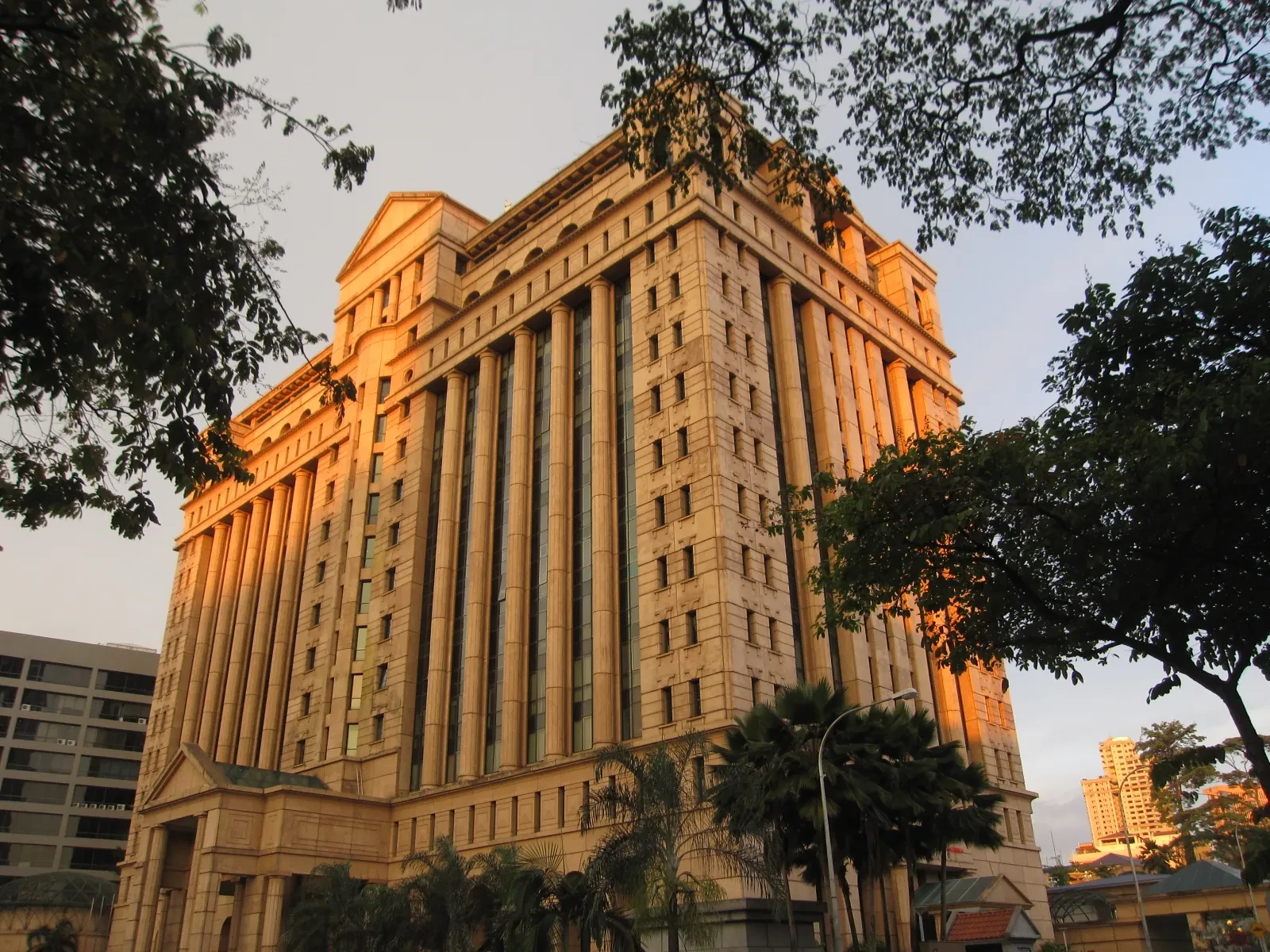
The image shows the Bursa Malaysia building in Kuala Lumpur. Travelpleb dedicated the photograph to the public domain under CC0 1.0.