Coromandel International’s consolidated first-quarter profit fell 24% from a year earlier to about 3.82 billion rupees even as operating revenue increased 16% to 81.65 billion rupees. The Indian crop-inputs producer reported the results on July 23, putting a number on the pressure that higher feedstock and financing costs are exerting across agricultural supply chains.
Total expenses rose faster than sales. Business Standard reported a 19.4% increase to 77.01 billion rupees, with raw materials and packing costs climbing 29.4% to 46.15 billion. Finance costs rose 31% to 890 million rupees. Earnings before interest, tax, depreciation and amortization slipped to roughly 7.56 billion rupees from 7.82 billion, compressing the margin to 9.3% from 11.1%.
Coromandel sold more but kept less of each rupee. The first-quarter revenue gain was outweighed by higher input and funding costs, producing a 24% profit decline. The central question for the rest of the financial year is whether raw-material prices normalize before the company has to choose between accepting weaker margins and passing more cost to farmers.
Two businesses, different momentum
The nutrients segment generated about 69.51 billion rupees of revenue, up 9.4%. Crop protection grew much faster, rising 72.6% to 12.51 billion rupees, according to the reported segment figures. Coromandel said crop-protection revenue increased about 20% on a comparable basis and segment EBITDA rose 44%, indicating that portfolio and accounting differences need to be read alongside the statutory result.
Nutrients remain the larger engine. Fertilizer economics depend on global prices for ammonia, phosphoric acid, sulfur and natural gas, as well as currency movements and India’s subsidy framework. A disturbance in the Middle East can reach Coromandel through freight, insurance and feedstock costs even when factory operations continue normally.
The company cited elevated raw-material costs associated with regional tensions. That explanation is plausible, but it does not remove management’s responsibility for procurement, inventory and pricing. Investors should compare Coromandel’s margin with peers exposed to the same commodity environment. If competitors protect profitability more effectively, the difference may lie in contracts, product mix or execution rather than geopolitics alone.
Capacity projects add leverage to the cycle
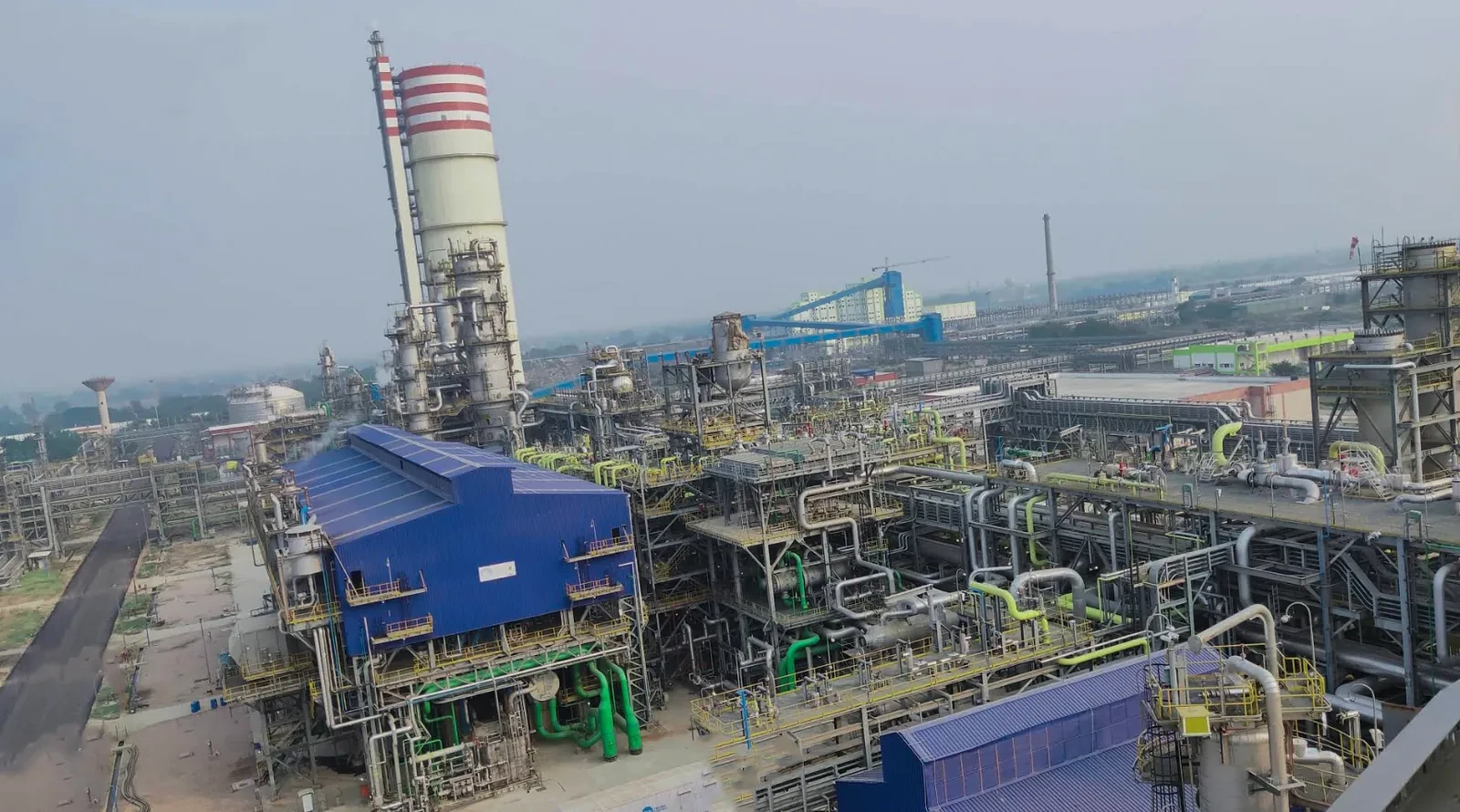
Coromandel has been expanding acid and fertilizer capacity, including projects at Kakinada and Visakhapatnam. Management said new facilities are stabilizing and expansion schedules remain on track. Backward integration can reduce dependence on imported intermediates and improve reliability, but commissioning periods often bring lower utilization and additional fixed costs before benefits appear.
That timing matters when finance expense is already rising. New plants require cash before they produce steady output. If input prices stay high or farm demand weakens, utilization can disappoint just as depreciation and interest increase. Conversely, a successful ramp during a better pricing environment could restore margins quickly.
Coromandel’s crop-protection growth offers diversification. Branded pesticides and specialty products can earn different margins from bulk nutrients and may be less directly tied to fertilizer subsidies. The segment also carries regulatory and product-stewardship obligations. Sales growth should be evaluated with receivables, channel inventory and the geographic mix to ensure distributors are not absorbing stock faster than farmers use it.
The farmer sits at the end of the cost chain
A producer can respond to higher costs through price increases, efficiency or lower margins. In Indian fertilizer, government policy constrains that choice for some products. Subsidies protect farm affordability but can create working-capital needs when reimbursements lag. The result is a three-way balance among fiscal cost, producer economics and farm input prices.
Weather adds another layer. A favorable monsoon supports planting and fertilizer demand; uneven rainfall can reduce application or shift product timing. Revenue growth in one quarter therefore does not establish a full-year volume trend. Channel inventories before and during the main seasons are more informative than dispatches alone.
The raw-material squeeze resembles cost transmission in other Asian industries. Delayed crude cargoes and changing refining margins, discussed in InfluenceAsia’s report on Asian refiners, show how logistics shocks redistribute profit before end demand changes. Capital-market financing, such as Ather Energy’s institutional placement, illustrates the other side: growth projects are easiest to fund when investors can see a credible route from spending to cash generation.
Counterevidence to a bearish reading is the top-line expansion and crop-protection performance. Coromandel remains profitable, has a broad distribution network and may recover quickly if feedstock prices retreat. One quarter of margin compression does not invalidate its integration strategy. It does raise the proof threshold for the next results.
Balance-sheet discipline will decide how much flexibility management has. Rising finance cost may reflect borrowing for expansion, working-capital needs or the timing of subsidy receipts; the cash-flow statement will separate those effects. Investors should also watch inventory valuation. Buying feedstock at a peak can delay margin recovery after spot prices fall, while lean inventory risks production interruptions. Neither a price forecast nor a revenue target captures that operational choice on its own.
The observable metrics are gross and EBITDA margin, raw-material expense as a share of revenue, working-capital days, net debt and utilization at new plants. Segment profit in crop protection will show whether its growth provides genuine diversification. Those figures, rather than a single commodity forecast, will indicate whether the first-quarter decline was a temporary cost shock or the start of a more persistent return problem.
The hero photograph depicts the Barauni fertilizer complex in India. Its creator, Utkarsh952348, made the work available through the CC0 1.0 public-domain dedication.