Asian refining margins for gasoil and jet fuel have risen above $65 a barrel, more than triple their prewar level just above $20, as renewed U.S.–Iran attacks disrupt Middle East crude shipments and Russia’s diesel-export ban removes products from the market. The price signal is strong; the physical response may be delayed.
Refiners in Asia had been expected to lead a third-quarter recovery in global fuel output by increasing throughput in August. Wood Mackenzie estimated regional runs would reach 30.37 million barrels a day, up from about 28 million in May and June. Cargo delays through the Strait of Hormuz and around the Red Sea now put that increase at risk.
The refining problem is no longer a lack of incentive but a shortage of reliably delivered crude and spare processing capacity outside China. U.S. and European plants are already operating near their limits. Asian facilities can raise runs only if feedstock arrives. China has the largest unused capacity and the stockpiles to change the balance, but export policy and weak domestic demand may keep part of it idle.
The August recovery was supposed to be led by Asia
The International Energy Agency said on July 10 that global refinery runs were expected to average 81.6 million barrels a day in the third quarter, more than 4% above the second quarter but still 4% below a year earlier. Asia was central to that forecast after maintenance and earlier supply disruptions depressed output in May and June.
The route assumptions have changed. Roughly a fifth of the world’s oil passed through the Strait of Hormuz before the current war. Iran-related disruption has reduced that flow, while Yemen’s Houthis have threatened Saudi exports through the Red Sea. Energy Aspects estimates that more than 3 million barrels a day of Saudi crude bound for Asia could be forced onto much longer routes.
Three tankers carrying Saudi oil to China and India reversed course near Bab el-Mandeb on July 21 and headed toward the Suez Canal, according to shipping movements reported by Reuters. A voyage diverted around Africa can add weeks and tie up vessels, effectively tightening supply even when the producing country loads the same volume.
The distinction between supply and arrival is crucial. A refiner may have purchased enough crude for August, but it cannot process a cargo still at sea. Taiwan’s Formosa Petrochemical had planned to raise throughput to 480,000 barrels a day, close to 90% of capacity. President K.Y. Lin said August supplies had been secured while delivery timing remained uncertain.
Record margins reveal scarcity, not easy profit
High product margins normally encourage plants to run harder. In this case, they also measure how little flexibility remains. Russia’s ban on diesel exports, imposed after drone attacks on refineries, removed another source of middle distillates. European diesel margins reached a record $66.25 a barrel, while a widely used U.S. refining spread approached $70.
Processors benefit only if they have crude, functioning equipment and products that can reach customers. Unplanned outages, shipping costs and working-capital needs rise in a stressed market. A plant may earn more per barrel while processing fewer barrels, leaving total profit less spectacular than the headline margin suggests.
Consumers encounter the pressure through diesel, aviation fuel and transport-intensive goods. Refining margins are not the same as retail prices because taxes, distribution and currency also matter. They are a forward signal that product inventories are tight and that demand may have to slow if supply cannot respond.
The risk extends beyond fuel sellers. Philippine Airlines’ new long-haul aircraft plan assumes years of fleet growth, but near-term jet-fuel prices still affect route economics and cash. Airlines can hedge part of the exposure; they cannot eliminate a prolonged regional shortage.
China holds the largest available lever
Refineries in Asia outside China are operating at 93% to 95% of prewar levels, Kpler analyst Sumit Ritolia told Reuters. China’s runs fell to 58% of capacity in June, giving the country the clearest ability to raise production. Wood Mackenzie expects Chinese throughput to increase from 12.63 million barrels a day in June to 13.96 million in August.
Capacity does not guarantee exports. Chinese refiners have limited runs because domestic demand is weak and fuel-export quotas constrain overseas sales. Beijing eased restrictions for July, but had not made the August policy clear at the time of reporting. State and independent refiners also differ in access to crude, credit and export channels.
Large stockpiles reduce China’s dependence on immediate imports and allow plants to process stored crude while shipping routes are disrupted. Using those inventories is a policy and commercial choice. Authorities must weigh domestic prices, strategic reserves, refinery profitability and the desire to avoid oversupplying external markets once routes normalise.
One concrete increase is already visible: Shenghong Petrochemical’s 320,000-barrel-a-day refinery in Jiangsu is expected to return in mid-August after an overhaul. More restarts and higher operating rates would help, but product export approvals determine whether additional barrels reach the regional market.
Europe and the United States have little room left
U.S. and European refiners are maximising output into high margins. Analysts cited by Reuters expect U.S. Gulf Coast runs to rise by about 200,000 barrels a day in the third quarter, 2.1% above a year earlier. That is useful but small compared with the potential disruption of several million barrels a day in crude routes.
Running plants beyond normal rates also raises reliability risk. Maintenance can be deferred only for a time, and equipment failures during a shortage can magnify the price response. Refiners are favouring diesel because its margin is strongest, but the same crude barrel also produces gasoline and other products. The output slate cannot be changed without limits.
Capital decisions remain difficult despite exceptional margins. New refineries take years and face uncertainty from electric vehicles, efficiency and climate policy. PETRONAS’s long-dated LNG commitments illustrate the same energy-industry tension: current scarcity can justify investment whose economics will be tested in a different market.
Shipping and quotas are the forward indicators
The August outlook can be tracked without guessing at geopolitics. Tanker passages through Hormuz and Bab el-Mandeb will show whether crude flows recover. Voyage times will reveal the scale of rerouting. China’s export quotas and refinery-run data will indicate whether spare capacity becomes regional supply. Product inventories in Singapore, Europe and the U.S. will show whether higher runs are rebuilding stocks.
Wood Mackenzie’s 30.37 million-barrel-a-day Asian estimate is the central operational benchmark. A material shortfall would confirm that logistics defeated margin incentives. Formosa’s planned 480,000 barrels a day and Shenghong’s restart provide company-level checks inside that total.
Record margins are doing what markets require: rewarding every available barrel and discouraging demand. They cannot shorten a voyage or open a closed route. The decisive August number will not be the refining spread but the amount of crude that arrives at Asian plants and the volume of fuel China allows into export markets.
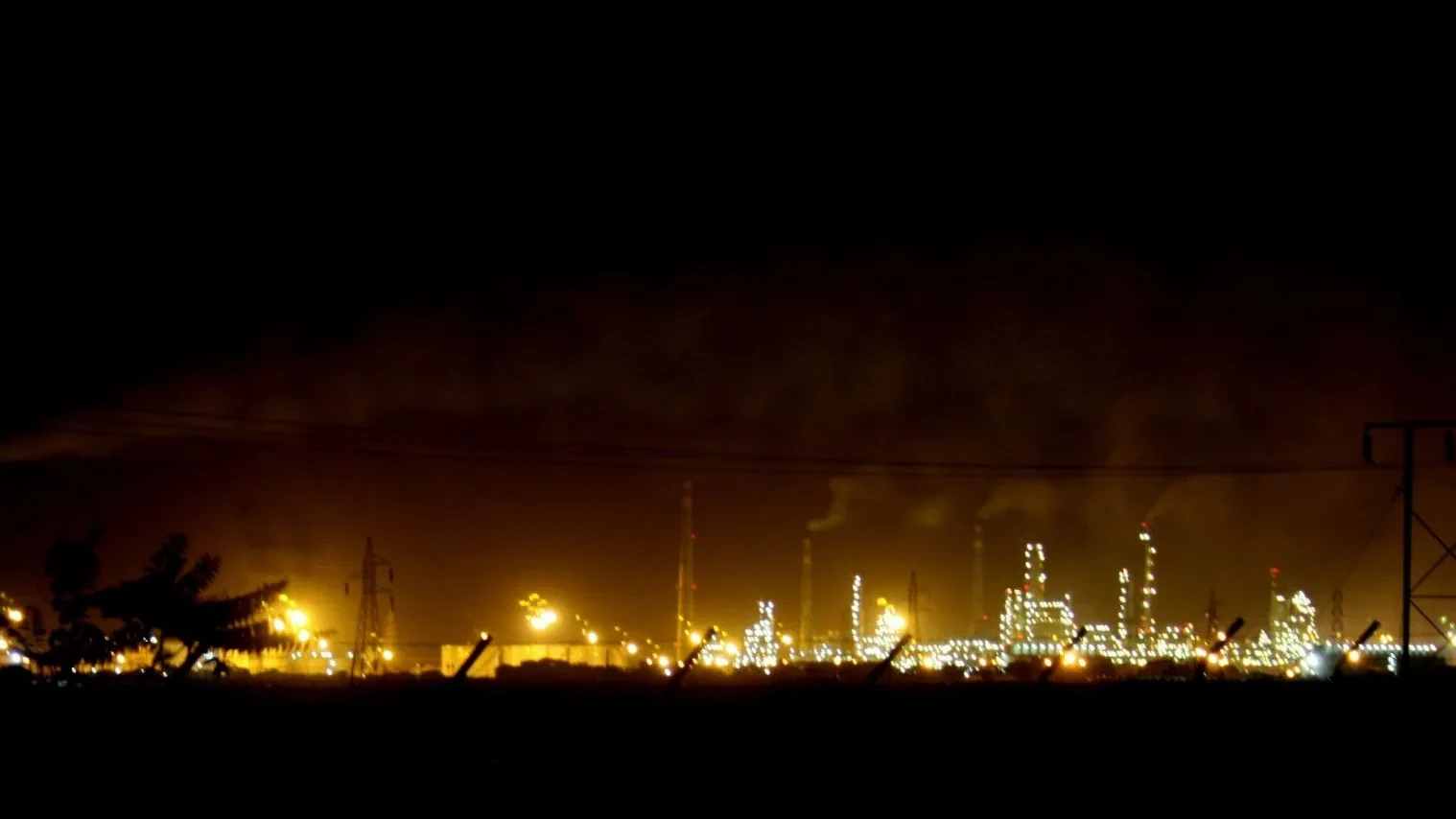
Evidence: the International Energy Agency’s July 2026 Oil Market Report, Wood Mackenzie throughput estimates, Formosa Petrochemical statements and Reuters reporting. Photograph: Essar Oil refinery at Vadinar, by Abhisek Sarda, Wikimedia Commons, CC BY 2.0; cropped and converted to WebP.