Samsung Electronics said on July 21 that it is creating a robotics division reporting directly to its chief executive, a structural change that puts one person and one operating unit between the company’s research programs and a commercial robot business. The RX, or Robotics eXperience, division will combine long-range planning, core technology development and business execution. Executive Vice President Lee Dong-kun, who previously worked on robotics strategy at Hyundai Motor Group and its Boston Dynamics affiliate, will lead a new strategy team inside the division.
The decision matters because Samsung has already assembled many of the pieces needed to compete in robotics without yet showing that they form a coherent business. It has artificial-intelligence and semiconductor expertise, global consumer distribution, factories that can serve as internal proving grounds, and control of Rainbow Robotics, the South Korean specialist founded by researchers from KAIST’s humanoid-robot program. The RX organization is an attempt to make those assets answer to one commercial timetable.
In plain terms, Samsung has moved robotics from a collection of projects into a CEO-supervised operating priority. The company says RX will coordinate strategy, technology and commercialization, while research hubs in South Korea and overseas widen its access to engineering talent. The observable result will not be a new organization chart; it will be working products, disclosed customers and repeatable revenue.
One chain of command for several robot bets
Samsung’s statement says the new unit will be based at its Seoul R&D campus in Umyeon-dong and will expand research capabilities at home and abroad. Reuters reported that Samsung plans robotics research bases in the United States, China and Japan. That network gives RX a broad mandate, but also a difficult coordination problem: industrial robots, service machines and consumer devices require different safety cases, sales channels and maintenance systems.
Lee’s recruitment adds operating context. Hyundai bought a controlling interest in Boston Dynamics in 2021 and has treated robotics as both an industrial tool and a future mobility business. Samsung is not importing Boston Dynamics’ machines or intellectual property, but it is bringing in an executive familiar with the long interval between a compelling demonstration and a reliable commercial deployment. That experience is especially relevant in humanoids, where locomotion videos often advance faster than unit economics.
The reorganization also follows Samsung’s decision to become Rainbow Robotics’ largest shareholder. Rainbow was founded in 2011 by engineers associated with KAIST’s HUBO humanoid program and has developed collaborative arms, mobile manipulators and bipedal platforms. Samsung said at the time that it wanted to combine its AI and software capabilities with Rainbow’s robot technology. RX creates a place where that promise can be measured.
There is a useful comparison inside Samsung itself. The company’s semiconductor and mobile businesses succeed through tightly managed product road maps, manufacturing yield and distribution. Robotics has a less settled stack: perception models, actuators, batteries, controls, training data and safety systems may come from different teams or partners. Consolidation can reduce duplication, yet a central unit will still need to decide which layer Samsung should own.
Factories offer the first credible market
The most practical early customers may be Samsung’s own plants. In March, the company described a plan to turn its global manufacturing network into “AI-driven factories” by 2030, including the use of humanoid and task-specific robots for line operations, logistics, assembly and hazardous-environment monitoring. That program gives RX controlled environments in which it can test uptime, task completion and human-machine safety before selling externally.
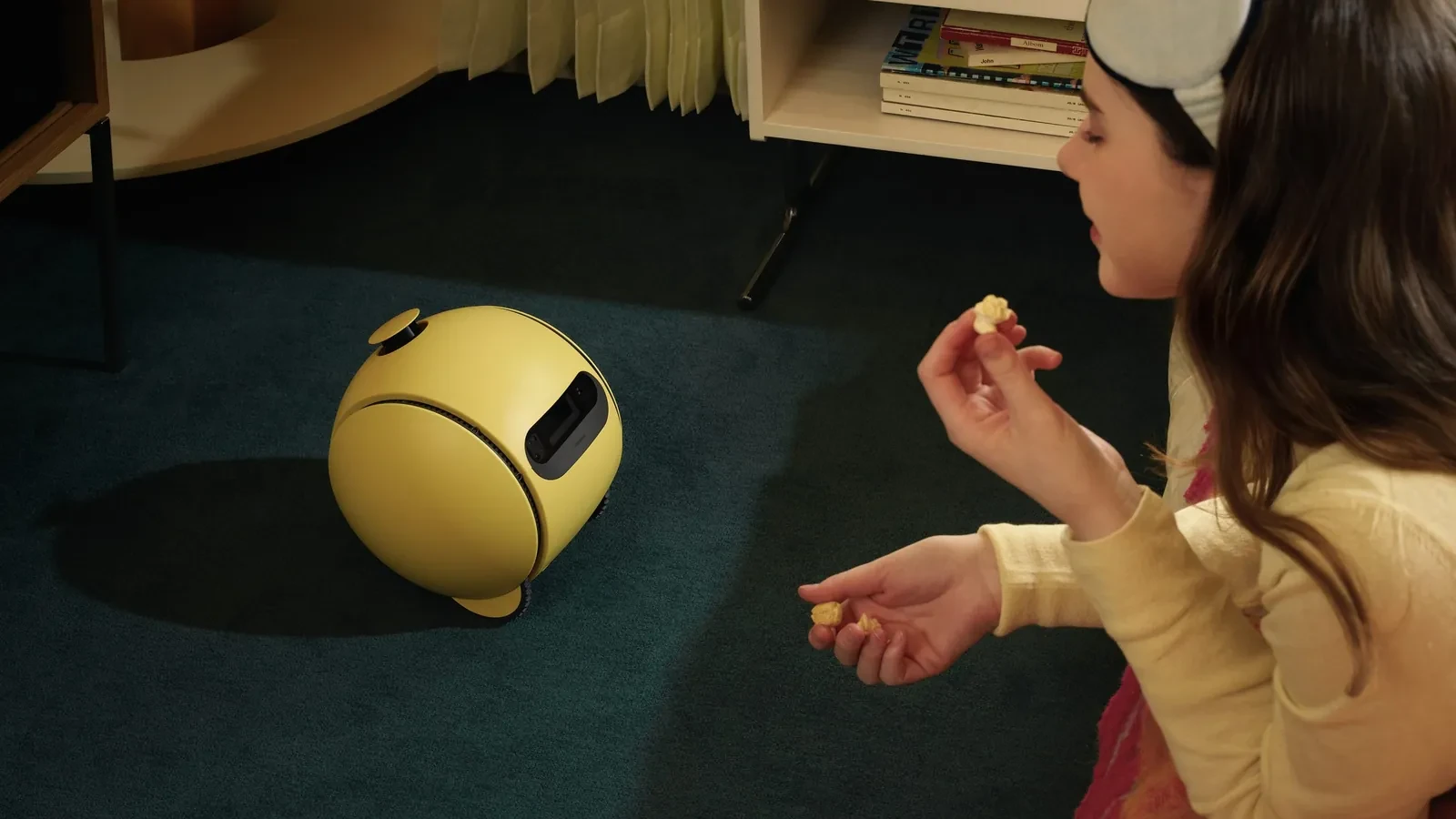
Industrial deployment would also avoid the hardest consumer question: what recurring job justifies a household robot’s cost? A factory can calculate the value of reduced downtime or safer inspection. A home robot must be reliable around children, pets and unstructured spaces while competing with much cheaper appliances. Samsung has shown consumer concepts such as Ballie, but product delays across the industry demonstrate the distance between an exhibition prototype and a supported device.
Readers following the shift from robot demonstrations to autonomous work will recognize the same constraint: foundation models can improve perception and planning, but physical systems still fail through wear, power limits and edge cases. Samsung’s AI infrastructure choices will matter only if RX can translate them into stable behavior on machines.
The commercial evidence is still missing
Samsung did not disclose a budget, revenue target, launch date or first customer for RX. Nor did it specify how Rainbow Robotics will be governed alongside internal teams. Those omissions are significant. A chief-executive reporting line can speed decisions, but it can also place several attractive use cases under a broad label without forcing a product choice.
Competition is already strong. Hyundai has Boston Dynamics; Tesla is developing Optimus around its factories; Chinese manufacturers are lowering hardware costs; and specialist companies have years of experience in warehouse, collaborative and surgical systems. Samsung’s advantages in chips, memory, displays, appliances and mass manufacturing do not automatically create a robot platform. Integration is the work, not the starting asset list.
Capital allocation will provide an early signal. Investors can track additional purchases of Rainbow shares, disclosed spending on robotics laboratories, hiring for safety and field engineering, and whether Samsung begins reporting robot orders or deployments. Technical evidence will be more granular: hours of autonomous operation, intervention rates, deployment sites and maintenance cost.
Samsung’s broader leadership challenge resembles the one faced by other Asian technology groups trying to make AI economically legible. TCS has put a number on AI revenue; Samsung has now put a reporting line around robotics. Both moves create accountability, but neither substitutes for margins and repeat business.
The next decisive RX announcement should therefore be narrower than this one. A named machine, a defined task and a customer willing to disclose operating results would show that the new division is choosing where to compete. Until then, Samsung has solved the organizational question and left the product question open.
Source note: Samsung Electronics’ July 21 announcement, Reuters reporting carried by Investing.com, Samsung Global Newsroom materials and public Rainbow Robotics disclosures were used for this report. Hero image: Samsung’s Ballie robot in an official Samsung U.S. Newsroom press photograph; © Samsung Electronics, editorial media use.