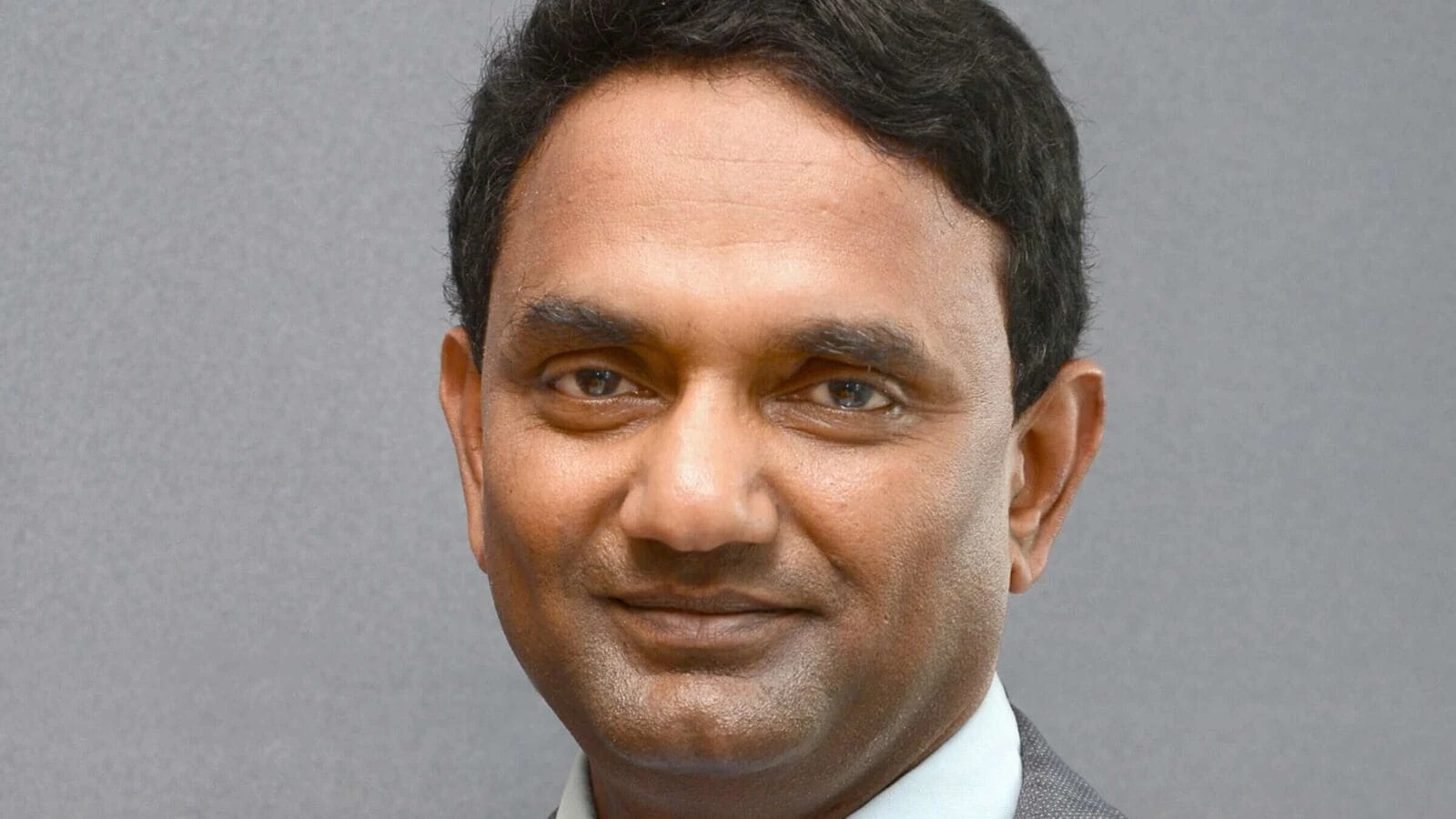
Tata Consultancy Services began the year to March 2027 with a metric that makes its artificial-intelligence strategy unusually tangible. Annualised AI revenue reached $2.6 billion in the June quarter, up 13.6 per cent sequentially. The company also reported $9.5 billion of total contract value and several AI-led transformation wins. K. Krithivasan can now demonstrate that clients are paying for more than experiments. His next problem is to show that this revenue creates better economics rather than accelerating the decline of effort-based billing.
Quarterly revenue was $7.624 billion, flat sequentially and up 2.7 per cent year on year in reported dollars. Constant-currency growth was 0.4 per cent from the previous quarter. Excluding an exceptional item, operating margin was 24 per cent, net margin 19.2 per cent and net income $1.46 billion. Cash from operations equalled 93 per cent of net income. The combination of modest growth and strong profitability is familiar at TCS, but AI changes the balance. The company must invest and cannibalise parts of delivery while investors expect the margin discipline that has defined its premium.
Krithivasan has framed demand around modernisation, cybersecurity, sovereign cloud, platform simplification and AI-led operating change. These categories reinforce one another. Enterprises cannot deploy reliable agents on fragmented data and obsolete systems, while sovereign requirements increase the need for controlled infrastructure. TCS’s breadth is an advantage because it can connect the layers. It is also a risk because the company may spread AI labels across conventional work without changing the underlying commercial model.
The AI run-rate needs a quality test
An annualised revenue figure helps establish scale, but its composition matters. It may include consulting, data preparation, cloud migration, model engineering, software development and managed operations. Some work is incremental; some may be existing work delivered with new tools; some could substitute for future labour revenue. Krithivasan should maintain a consistent definition and explain enough about growth, margins and repeatability for investors to assess quality.
The best AI revenue creates reusable assets or long-lived operating responsibility. A short pilot can generate fees but little durability. A deployed agent integrated with core processes can lead to monitoring, security, model operations and continuous redesign. TCS should measure the proportion of AI engagements moving from proof to production, the time required, and the expansion that follows. Those indicators would reveal whether the $2.6 billion run-rate is a new franchise or a temporary surge in preparatory work.
The $800 million agreement with SKF is important because it links AI to broad business transformation rather than a narrow technical implementation. Large programmes can provide scale and references, but they carry concentration and execution risk. Productivity commitments made at signing may become expensive if tools fail to mature as expected. TCS needs staged economics, with baselines agreed and benefits shared only when verified.
Partnerships with model and software providers expand capability, including relationships with Anthropic, Mistral and ServiceNow. TCS must remain the architect rather than become a channel. Its value comes from selecting technology, integrating it with complex estates and accepting accountability for results. If clients can obtain the same bundle directly from a cloud provider, pricing power will weaken. Industry process knowledge and proprietary accelerators therefore need to be visible in delivery.
Margin discipline cannot mean protecting the old model
A 24 per cent operating margin gives TCS more room than many competitors to fund the transition. It can invest in platforms, data-centre capability, training and partnerships without sacrificing financial resilience. But the margin can become a constraint if managers avoid disruptive pricing or internal automation to protect quarterly performance. Krithivasan must distinguish temporary investment dilution from structural inefficiency and communicate that difference clearly.
AI should lower the cost of software engineering, testing, service management and business-process work. If TCS captures some benefit, margins can improve. If clients capture all of it through lower prices, revenue and profit may fall. If neither captures it because review and governance costs rise, the technology will disappoint. Contract design determines the allocation. Outcome-linked fees, platform charges and gain-sharing can preserve value, but only when results are measurable and risks controllable.
The company’s cash generation supports patience, yet every infrastructure investment needs utilisation discipline. TCS has developed HyperVault as part of its AI and sovereign-cloud positioning. Owning or controlling more infrastructure can improve strategic relevance, especially for regulated customers, but data centres carry capital, power and obsolescence risk. Krithivasan should align capacity with contracted demand and use partnerships where ownership does not create differentiated control.
That choice should also reflect geography. Sovereign requirements differ across India, Europe, the Middle East and other markets, and a single ownership model will not fit each jurisdiction. TCS can retain control over architecture, security and operations while using local infrastructure partners where regulation or economics favour them. The discipline is to define which layer creates the client’s willingness to pay. If sovereignty depends mainly on governance and operational access, owning the building may add little. If guaranteed capacity and hardware configuration are central to the service, direct investment may be justified.
The economic case also depends on sales behaviour. Account teams accustomed to expanding headcount may resist deals that reduce it. Incentives should reward total client value, margin, reuse and growth across services. A smaller delivery team using common tools should be celebrated if it strengthens the relationship. Otherwise, the organisation will describe itself as AI-led while protecting the unit economics of manual work.
A workforce of nearly 594,000 must change its shape
TCS ended June with 593,798 employees and trailing attrition of 13.6 per cent. At that scale, skill transition is not a side programme. It is the operating strategy. AI can make engineers more productive, but the benefit depends on architecture, domain understanding and verification. Employees who merely prompt models without understanding systems may create faster output and slower resolution of errors.
Krithivasan needs to redesign roles and teams. Junior staff should learn through AI-assisted work without losing the foundational tasks that build judgement. Experienced engineers should spend less time on repetitive production and more on design, review and client decisions. Managers must supervise mixed human-agent workflows, including access controls and quality thresholds. Training volumes are not enough; deployment performance should determine whether learning is effective.
The workforce may not need to grow in line with revenue. That can support margin and higher revenue per employee, but it also changes the social contract of a company that has long created large numbers of technology careers. TCS should use natural attrition, redeployment and reskilling where possible while being honest about roles that will decline. Uncertainty handled poorly can increase voluntary departures among the people most capable of leading new work.
A smaller intake would also affect the future leadership pipeline. Entry-level engineering has historically served as an apprenticeship. Krithivasan should preserve structured pathways in which graduates use AI but remain accountable for understanding and testing the result. The objective is not to eliminate learning work; it is to compress it while raising the level of responsibility.
Sovereignty and security can support premium value
As AI becomes embedded in regulated processes, clients care about where data resides, which models can access it and how decisions are audited. TCS’s sovereign-cloud and cybersecurity capabilities can turn those concerns into higher-value work. The company can offer controlled environments, model evaluation, identity, monitoring and incident response as one operating system.
This position requires neutrality. Sovereignty is not achieved merely by locating servers within a border; it includes control over models, keys, software dependencies and operational access. TCS should define the level of control each service provides and avoid broad claims that outrun contractual reality. Transparent architecture can become a competitive advantage as regulators and boards demand evidence.
Security must also be built into the productivity case. Agents with access to enterprise systems can expand the attack surface and make errors at machine speed. Every efficiency gain should account for monitoring, human approval and recovery. TCS can charge for that assurance if it demonstrates that safe deployment is faster and cheaper than clients attempting it alone.
The next number should connect AI to growth
The $2.6 billion run-rate marks useful progress, but it will lose meaning if the total company continues to grow only slightly. Krithivasan needs to show whether AI wins expand wallets, accelerate modernisation and improve conversion of the $9.5 billion order book. He should also disclose how much productivity is reinvested in price, absorbed by wages or retained as margin.
TCS’s advantages are formidable: deep client access, cash generation, industry knowledge, a large trained workforce and the ability to operate critical systems. Its weakness is the possibility that scale slows self-disruption. Smaller specialists can build around AI-native workflows without protecting legacy revenue. Cloud and software groups can bundle services with platforms. Clients can also develop more capability internally.
Krithivasan must use scale as a learning network. A successful agent or delivery method should move quickly across accounts, subject to data and industry controls. Common engineering and governance reduce the cost of each deployment. Account-level customisation should be limited to what creates real client differentiation. That is how a services company gains some software economics without pretending to be a product company.
The first quarter shows that TCS can sell AI while preserving a 24 per cent margin. The decisive test is whether that combination persists as projects move into production and automation reaches the core delivery base. Krithivasan has put a credible revenue number on the transition. In 2026, he must put an equally credible economic model behind it.