Baykar’s rise has been built on an unusually clear proposition: develop capable unmanned aircraft quickly, prove them in demanding conditions and sell them to countries that need an alternative to the established American, European, Israeli and Chinese suppliers. In 2025, that proposition produced $2.2 billion of exports, up from $1.8 billion in each of the previous two years. Overseas sales accounted for 88 per cent of Baykar’s $2.5 billion in annual revenue, and the company had signed export contracts across 37 countries.
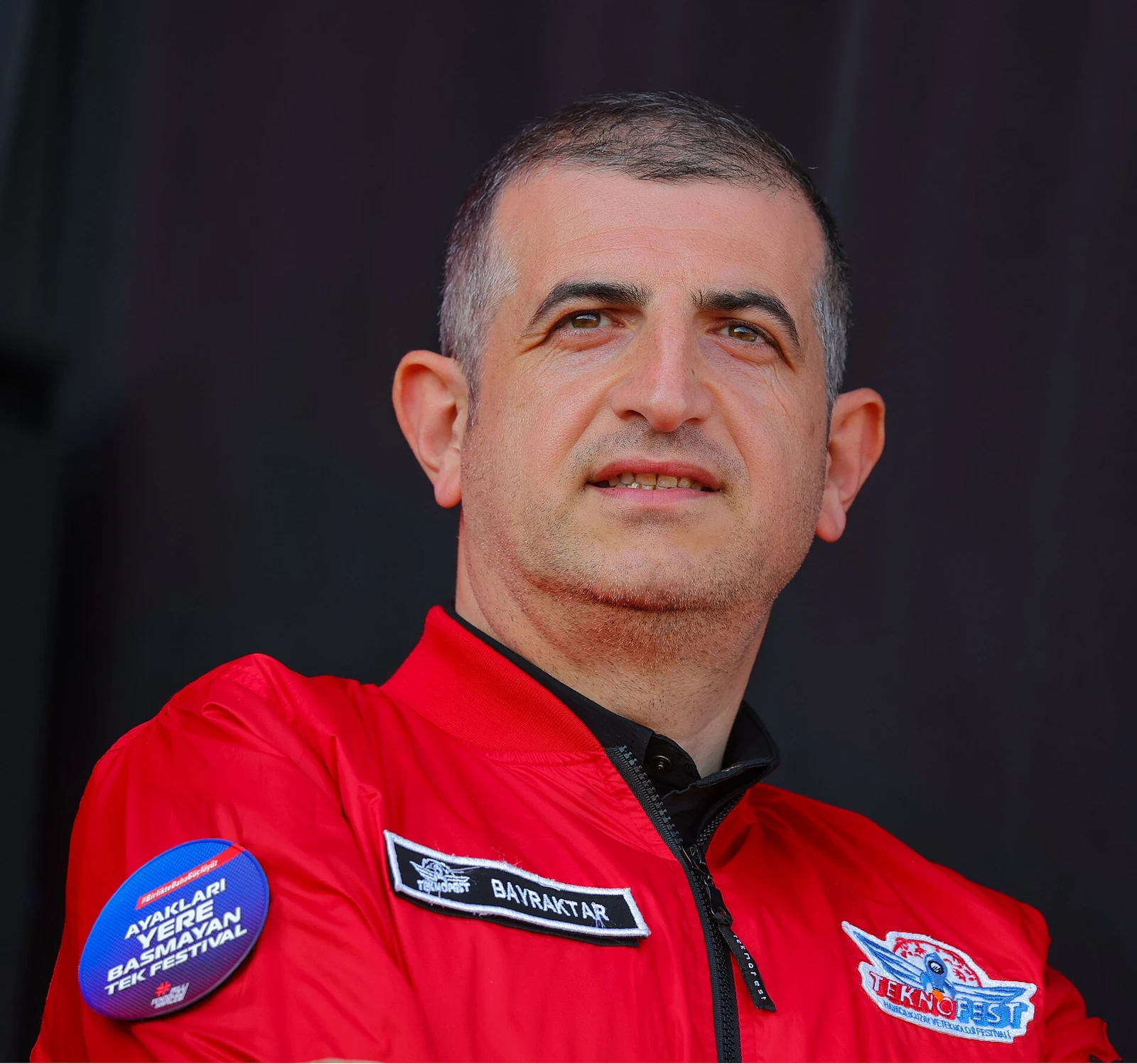
For chief executive Haluk Bayraktar, the next stage is more complicated than selling additional aircraft. Baykar now owns Piaggio Aerospace, a 140-year-old Italian aviation company, and is an equal partner with Leonardo in LBA Systems, a joint venture intended to combine Turkish unmanned platforms with Italian mission systems, sensors and certification expertise. It is moving from being an export-led national champion towards becoming a multinational industrial organisation.
That transition changes the leadership problem. A focused private manufacturer can move quickly because engineering, production, testing and customer decisions remain close to one another. A cross-border aerospace group must also manage certification, legacy assets, labour commitments, intellectual property, government oversight and the expectations of partners that have their own strategic priorities. The central question for Bayraktar in 2026 is whether he can add institutional scale without diluting the speed and accountability that created Baykar’s advantage.
The opportunity is considerable. European governments are increasing defence expenditure, seeking greater autonomy in critical capabilities and rebuilding industrial capacity after years of underinvestment. Unmanned systems have moved from a specialist category to a core element of air power. Demand is expanding from remotely piloted surveillance and strike platforms towards collaborative combat aircraft, autonomous mission management and systems designed to operate from short runways or naval vessels.
Baykar has products aimed at each layer of that progression. The Bayraktar TB2 established the export network. The heavier AKINCI broadened payload and mission capability. The ship-capable TB3 and jet-powered KIZILELMA extend the company into more demanding operational and technological territory. But a portfolio is not yet an industrial system. Bayraktar must make production, support, certification and partnerships work across borders at the same reliability as the aircraft themselves.
Exports created freedom and concentration
Baykar’s export intensity is a source of strategic strength. The company says it has financed its projects from its own resources and generated 83 per cent of cumulative revenue from exports since beginning its unmanned-aircraft research programme in 2003. That record reduces dependence on a single domestic procurement cycle and provides cash for development without relying on public equity markets.
It also creates concentration of a different kind. Defence exports are exposed to diplomatic relations, sanctions, export licences, changes of government and the operational performance of equipment in conflict. A contract can carry political meaning well beyond its financial value. The larger Baykar becomes, the more its commercial choices will be interpreted as signals of Turkish foreign policy, even when the company’s immediate objective is industrial.
Bayraktar therefore needs a disciplined market architecture. Country risk, payment security, end-use controls and long-term support requirements must be assessed as rigorously as aircraft performance. The headline value of an order can be misleading if training, spare parts, munitions integration and fleet availability are not priced and governed for decades. Export leadership becomes durable only when customers remain operationally satisfied after the initial delivery ceremony.
The installed base can become a powerful recurring business. Fleet support, upgrades, simulation, data links and mission-system integration create relationships that last longer than manufacturing programmes. They also impose obligations. Baykar must be able to supply parts during geopolitical disruption, maintain software security and help customers adapt to changing threats without allowing bespoke configurations to fragment the product line.
Piaggio is a test of industrial stewardship
The acquisition of Piaggio Aerospace, completed in June 2025 after Italian government approval, gave Baykar a European production and maintenance foothold. The plan includes relaunching the P.180 aircraft, developing the newer Avanti NX, using Italian facilities to support production of Baykar platforms and creating a European centre of excellence for aircraft and engine maintenance.
One year after the transaction, Piaggio reported that its workforce stood at 677, meeting Baykar’s commitment to retain about 675 employees, and that its board had approved a new industrial plan. Those are useful signs of stability. The harder work lies ahead. Preserving jobs is not the same as creating a competitive operating model, and reviving a heritage aircraft requires decisions about market position, certification, supply chain and after-sales support.
Bayraktar serves as Piaggio’s chairman rather than its day-to-day chief executive, but the asset will still be viewed as a measure of his ability to govern at distance. He must allow local management sufficient authority to operate an Italian aerospace company while ensuring capital is allocated against measurable milestones. Integration should focus on capabilities that genuinely reinforce the group: engines, maintenance, European supplier relationships, certification and selected production. Forcing every activity into a common structure would risk destroying the specialist knowledge Baykar bought.
The transaction also places Baykar inside Europe’s political economy. Italian employment, procurement and technology sovereignty are not peripheral considerations; they are part of the licence to operate. Transparent governance and credible local investment will determine whether the acquisition is seen as a long-term industrial partnership or simply an entry route into European defence budgets.
Leonardo requires a partnership discipline
LBA Systems offers a different path to European scale. The 50-50 structure is designed to marry Baykar platforms with Leonardo electronics, sensors and mission expertise, with development and production in Italy for European and international customers. The strategic logic is strong. European buyers often require interoperable systems, recognised certification pathways and sovereign participation. Leonardo brings access and integration capability; Baykar brings platforms, operational experience and a faster development culture.
Equal joint ventures can also become indecisive if rights and accountability are not explicit. Product priorities, ownership of improvements, customer relationships and export approvals all need rules that work under pressure. The venture should have a narrow set of deliverables, a management team empowered to make trade-offs and a mechanism for resolving disagreement before programmes stall.
Bayraktar must be particularly careful about the boundary between partnership and dependency. Leonardo’s systems can increase the value and acceptability of Baykar aircraft, but the Turkish company should retain the architectural knowledge required to evolve its platforms. Conversely, European partners will expect protection for their technology and a credible share of high-value work. The relationship will last only if both sides can see how capability, not merely revenue, is being distributed.
This is where Baykar’s private ownership can help. The company can invest on a longer horizon than a listed manufacturer facing quarterly margin pressure. It can accept a period of integration expenditure if that creates a deeper European position. Yet private ownership also makes external scrutiny thinner. As Baykar becomes more important to multiple national security systems, stronger internal controls, independent challenge and clear reporting become commercial assets.
The KIZILELMA standard
The KIZILELMA unmanned combat aircraft is the programme most likely to define Baykar’s technological ceiling. Moving from propeller-driven unmanned aircraft to a jet-powered platform brings harder problems in propulsion, signatures, flight control, mission autonomy, weapons integration and manufacturing tolerance. Tests and public demonstrations can establish progress, but customers will ultimately judge availability, cost per mission and integration within a wider force.
Artificial intelligence is increasingly central to that value proposition. Autonomy can help unmanned aircraft navigate contested environments, coordinate with other platforms and reduce the cognitive load on operators. But defence AI demands evidence, safeguards and predictable behaviour. A system that performs impressively in a demonstration may encounter ambiguous data, electronic attack or unexpected interactions in service. Verification and validation must grow as quickly as the algorithms.
Bayraktar’s leadership test is to keep engineering ambition connected to production reality. A family of prototypes can absorb talent and capital without creating a supportable fleet. The company should resist the temptation to pursue every adjacent opportunity merely because its brand and cash flow permit it. Engines, advanced materials, autonomy and mission systems are logical areas of depth; unrelated expansion would weaken focus.
Supply-chain resilience also matters. Baykar’s localisation record has reduced exposure to restrictions that affected earlier programmes, but advanced aircraft still depend on specialised components, machine tools and materials. European expansion can diversify access while creating new regulatory dependencies. A robust design should include alternate suppliers, controlled interfaces and a clear understanding of which components must remain sovereign.
From national champion to multinational institution
Baykar’s 2025 export performance gives Bayraktar the financial means to attempt this transformation. The company’s reputation gives it access to partners that might once have treated a Turkish drone producer as a subcontractor. Neither guarantees success. Aerospace history contains many examples of acquisitions and joint ventures whose strategic logic failed under the weight of governance, certification and conflicting customer demands.
The next evidence should therefore be institutional rather than promotional. Can Piaggio execute its industrial plan and win sustainable business? Can LBA Systems deliver integrated products on time? Can Baykar increase production while maintaining quality and support across a larger installed base? Can it advance KIZILELMA without weakening the mature platforms that fund development? These are less dramatic questions than a flight test, but they determine whether an aerospace company endures.
Bayraktar also has to preserve legitimacy across several constituencies. Turkish stakeholders expect national capability and export influence. European governments expect local industrial value and secure supply. Customers expect operational independence and long-term support. Employees in Istanbul and Italy expect investment in skills. A durable strategy must make those interests complementary rather than pretending they are identical.
Baykar’s first era proved that an agile entrant could disrupt the unmanned-aircraft market. Its second will test whether that entrant can govern a larger system without becoming slow or diffuse. If Haluk Bayraktar succeeds, Europe will not simply be another export destination. It will become part of a distributed industrial base that strengthens Baykar’s technology, resilience and access. That is a more demanding ambition than selling aircraft, and a more consequential one.