Digital Asset said on July 21 that Shinhan Financial Group and SC Ventures, Standard Chartered’s innovation and venture unit, have joined its previously announced $355 million financing. The creator of the Canton Network did not disclose the two investors’ individual commitments or say that the total round had increased. Their addition broadens an investor group that already includes major financial institutions, technology investors and sovereign capital.
The material point is strategic, not the headline amount. Shinhan brings one of South Korea’s largest financial groups, while Standard Chartered operates across Asian, Middle Eastern and African markets. Both can contribute regulated-market expertise and potential distribution. Their names do not, by themselves, demonstrate that tokenized assets are settling at production scale.
Digital Asset has added two banking networks to a $355 million bet on institutional tokenisation. The next evidence must come from live assets, counterparties, settlement value and recurring fees on Canton—not from the number of institutions appearing in an investor list.
A financing round designed as a coalition
Digital Asset announced the main round in June, led by a16z crypto. It described the financing as oversubscribed and named participants including ADIA, Goldman Sachs, Citadel Securities, DTCC, Paxos, Virtu Financial, DRW Venture Capital, Tradeweb and Asian groups such as Hanwha Investment & Securities, SBI Holdings and HSBC. Independent reporting placed the company’s valuation near $2 billion.
That cap table mirrors the market Digital Asset wants to build. Canton is designed for regulated financial institutions that need privacy, permissioning and interoperability. A broad coalition can help solve the coordination problem: tokenized bonds or funds are more useful when issuers, custodians, trading venues and settlement agents can interact on compatible infrastructure.
The structure also creates ambiguity. An investor may be a customer, a development partner, an observer or all three. Public announcements often combine pilot projects with production deployments. A clear assessment requires transaction volumes, assets outstanding, active participants and the revenue Digital Asset earns from the network or associated software.
Shinhan and Standard Chartered have existing digital-asset and venture programs, so their participation is consistent with long-running experimentation rather than a sudden strategic reversal. The question is whether they move specific regulated products onto Canton and keep them there after a pilot period.
Institutional blockchain is competing with better databases
The strongest case for tokenisation is not that every asset needs a blockchain. It is that some markets still reconcile the same transaction across multiple ledgers, legal entities and time zones. A shared network can reduce manual breaks, enable near-continuous settlement and attach rules to an instrument. Privacy and legal finality are essential when the participants are banks rather than anonymous traders.
The counterargument is equally practical. Financial institutions already operate robust databases and messaging standards. Migration introduces integration cost, cyber risk and uncertain regulatory treatment. If a tokenized product retains conventional intermediaries and slow off-chain processes, its technological novelty may not reduce total cost.
Canton’s differentiated claim is synchronized applications with controls over who can see and use data. That design addresses a core institutional concern, but it must be tested under market stress. Throughput, recovery procedures, governance changes and the treatment of failed trades matter more than demonstration-day speed.
The leadership stakes can be placed beside Hana Al Rostamani’s technology and growth decisions at First Abu Dhabi Bank and Nikhil Kamath’s capital discipline at Zerodha. Regulated finance rewards infrastructure that is dependable, legible and economical, even when it is less visible than a consumer product.
What the new shareholders can make observable
Digital Asset said the additional investors strengthen its global reach. It did not identify a new Shinhan or Standard Chartered product launching on Canton, disclose expected revenue, or separate primary capital from any secondary share sales. Those missing facts limit conclusions about near-term commercial impact.
Useful disclosure would be specific: a Shinhan-issued asset with a settlement date and value; a Standard Chartered client transaction crossing jurisdictions; a custodian integration that reduces reconciliation time; or network statistics reported consistently each quarter. Repeating one successful pilot is more informative than announcing a larger group of partners.
Regulators are another independent force. Tokenized deposits, securities and funds can fall under different rules, and cross-border transactions introduce conflicts over identity, data location and settlement finality. A bank’s venture arm can invest before the relevant operating subsidiary receives every approval needed for deployment.
Interoperability is a related commercial test. Institutions will not want every asset class trapped in a separate network, yet moving value between ledgers can introduce bridges, custodians and new points of failure. Canton must show that its privacy model survives connections to conventional payment rails and other token systems. Disclosures about failed transactions, incident response and governance votes would help users assess that claim.
InfluenceAsia’s business coverage tracks capital decisions without treating them as investment advice. That distinction is important here. The $355 million round extends Digital Asset’s runway and gives it influential shareholders; it does not settle the argument over which institutional markets benefit from distributed infrastructure.
The first meaningful post-investment measure should therefore be a named production workflow involving one of the new backers. If it reports settlement value, participating entities and the former process it replaced, the transaction will connect strategic capital to operating change. Without that link, Shinhan and SC Ventures remain evidence of institutional curiosity rather than evidence of institutional adoption.
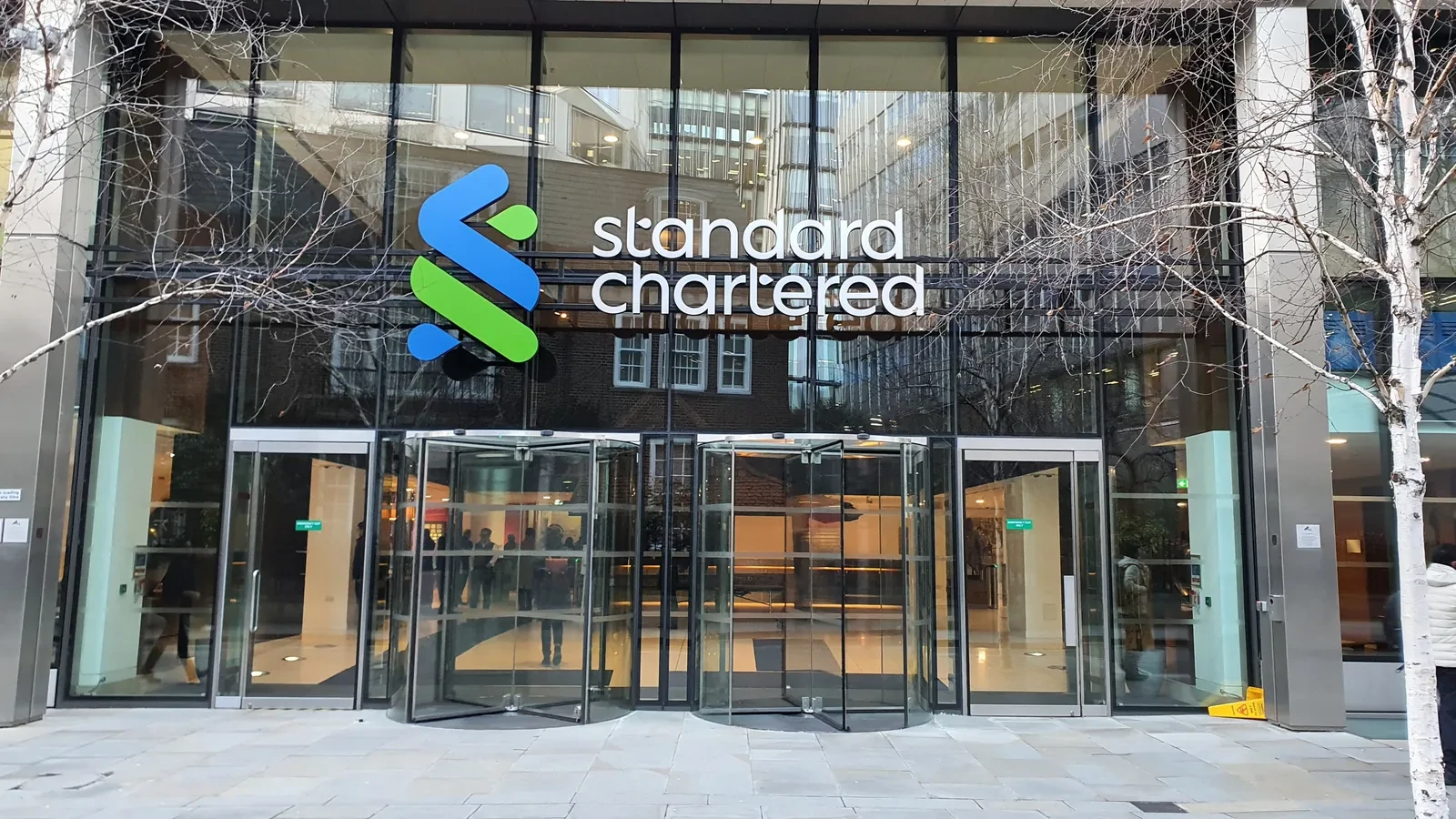
Source note: Digital Asset’s July 21 and June financing announcements, investor materials and independent coverage of the round by Cointelegraph and Decrypt were used for this report. Hero image: Shkuru Afshar’s photograph of Standard Chartered headquarters in London, licensed CC BY-SA 4.0 on Wikimedia Commons; resized.