Sports-related mergers and acquisitions in Asia-Pacific reached $3.69 billion in the year through July 13, the highest total in LSEG records dating to 1980 and more than 12 times the value a year earlier. The figure, reported by Reuters on July 23, contrasts with a broadly flat global total of $8.34 billion.
The surge reflects a change in how wealthy Asian families and fund managers approach sports. Sponsorship once bought visibility without ownership. Investors are now seeking direct stakes in franchises, leagues and related businesses, betting that audiences, media rights and scarce team assets can produce long-term appreciation. Most deals involve minority positions because outright control is expensive, restricted or simply unavailable.
Asia-Pacific’s $3.69 billion sports-deal record is an ownership shift, not proof of an investment return. Capital is moving from sponsorship into minority equity as buyers seek exposure to media rights, fan spending and scarce franchises. The thesis will be tested by cash distributions, governance rights, audience growth and exits—not by rising headline valuations alone.
Why minority stakes dominate
A minority deal lets an owner raise capital while keeping control and allows an investor to enter at a lower absolute price. It can also bring commercial networks, digital expertise or access to new markets. For a family office, the asset may combine financial aims with status and community influence. For an institutional fund, those non-financial attractions can become a warning if they push the price above supportable cash flow.
Governance is central. A 10% or 20% shareholder may have limited ability to change management, spending or distributions. Protective provisions, board representation, information rights and consent over major transactions determine whether “minority” means partnership or passivity. Sports organizations often have league rules that further constrain transfers and control.
Scarcity helps valuations. A city has only a limited number of top-tier teams, and leagues cap membership. Scarcity alone does not create liquidity. A buyer seeking to exit may have a small pool of approved purchasers, and other shareholders may hold pre-emption rights. Marked valuations can rise for years without a transaction proving them.
Media rights are the growth engine and the risk
Investors are betting that live sports will remain valuable as audiences fragment across streaming services. A match has urgency, social conversation and advertising inventory that scripted entertainment often lacks. In markets with rising incomes and mobile viewing, leagues can expand subscriptions, sponsorship, merchandising and international rights.
The same dependence creates concentration. If a broadcaster overpays and later restructures, or if a streaming platform changes strategy, league distributions can fall. Piracy, scheduling and weak production quality can limit pricing power. Rights growth also varies by sport: cricket can command enormous audiences in South Asia, while other leagues serve smaller but affluent niches.
Team economics include costs that grow with revenue. Player salaries, coaching, facilities, travel and fan acquisition compete for each new dollar. Salary caps and revenue sharing can protect margins, but not every league has them. Investors comparing teams with conventional companies should adjust for promotion and relegation risk, competitive-balance rules and the possibility that sporting success requires spending before it produces revenue.
Asia’s sporting economy broadens
Deal flow is not confined to famous football clubs. Cricket franchises, combat-sports properties, digital platforms, event operators, sports marketing and venue-linked businesses can all fall inside the category. That breadth can make the aggregate record look diversified even if a few large transactions account for most of the value. LSEG’s final full-year table should disclose deal count and median size alongside the total.
Athletes and competitions are also becoming investable media brands. InfluenceAsia’s coverage of Gukesh Dommaraju’s title defense and Divya Deshmukh’s effect on Indian chess showed how performance can expand sponsorship, broadcast and participation markets. Equity investors are trying to capture part of that growth through the organizations surrounding the talent.
Counterevidence to the boom comes from the global number. Worldwide sports M&A was approximately flat at $8.34 billion, according to the Reuters account. Asia-Pacific’s record may reflect a small number of large deals or timing rather than a permanent reallocation. Valuations also benefit from enthusiasm around media rights that may not compound at the same rate once contracts reset.
Currency adds another variable for cross-border owners. A team can grow local revenue while a foreign investor records a weaker return after exchange-rate moves. Hedging may protect near-term cash flows, but it cannot remove long-duration exposure to the economy where the fan base spends.
Deloitte’s sports outlook has emphasized changing ownership models and the need to connect fan data, content and venues. The operational opportunity is real: a well-run asset can deepen direct relationships with supporters instead of relying entirely on broadcasters. That requires investment in technology and trust. Poor data practices or aggressive monetization can alienate the community whose loyalty supports the valuation.
Forward measures should include rights revenue per viewer, match attendance, digital subscription retention, sponsor renewal and operating cash flow before player trading. Minority investors should disclose realized exits or distributions where possible. At the market level, deal count, median valuation multiples and the share of control transactions will reveal whether capital is spreading beyond a few trophy assets.
The record marks a change in behavior: Asian capital increasingly treats sport as an asset class. The next phase will establish whether owners can turn cultural scarcity into repeatable financial performance without weakening the competitions that made the assets valuable.
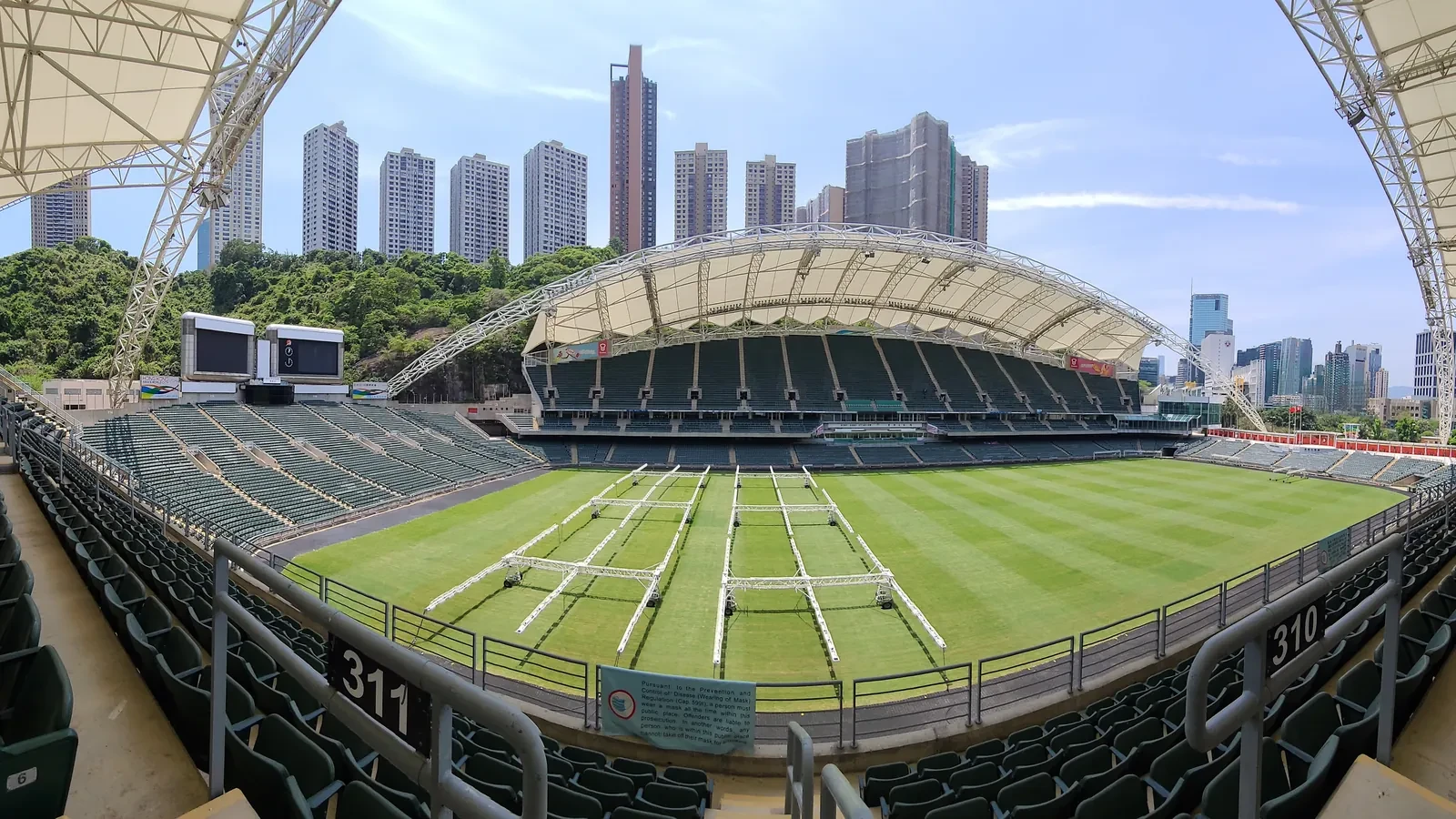
The panorama shows the interior of Hong Kong Stadium. Photograph by Geographer, sourced from Wikimedia Commons and resized for publication.